
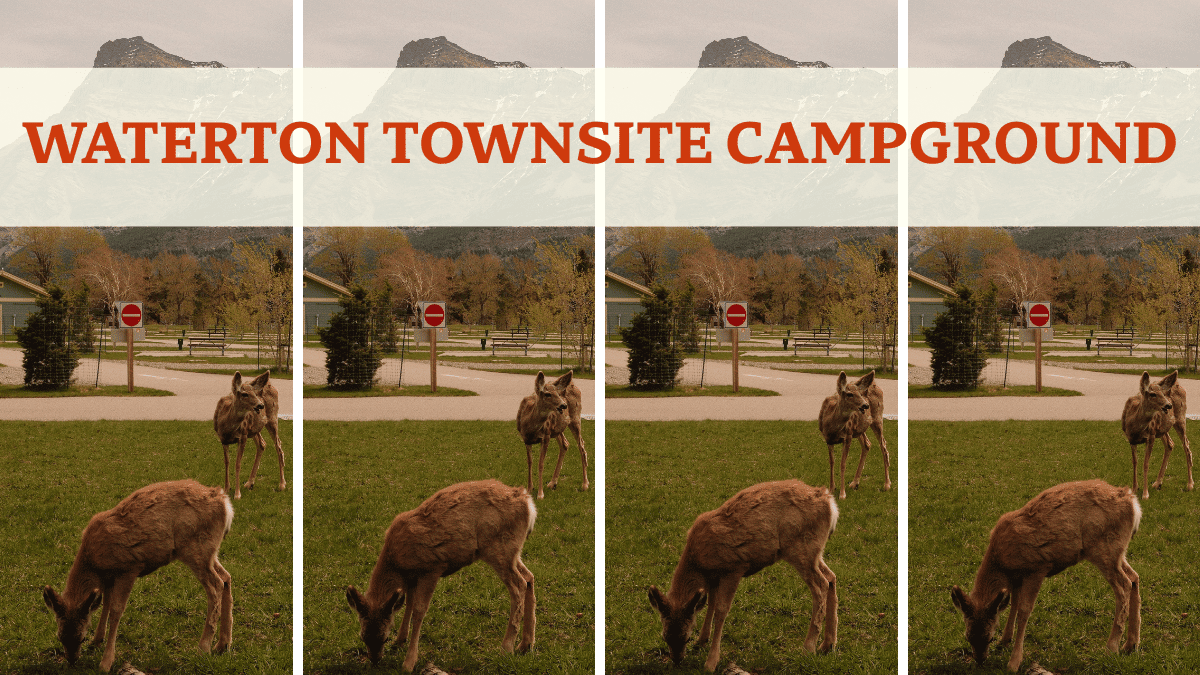
Waterton Townsite Campground hugs the southern edge of Waterton Village, right where the prairies crash into the mountains. It’s arguably the most popular Waterton Lakes National Park campgrounds and acts as the main frontcountry base for RV travelers.
Plenty of folks will tell you camping in Waterton is the best way to really soak up the area’s wild beauty up close. I’d agree! There’s just something about waking up here that other places can’t match.
This is the only campground in the park with full hookups for RVs. If you’re into exploring, checking out the various campgrounds near Waterton Lakes is a great way to get a feel for the area’s crazy mix of prairie and peaks.
When you visit Waterton National Park, knowing where to park your rig really matters. If you’re towing a travel trailer or driving a motorhome into this tucked-away corner of the Canadian Rockies, odds are you’ll land right here.
If you want a Waterton Lakes National Park campground with premium amenities, this is as good as it gets. There’s not really another spot in the park that comes close for RVs.
That said, the campground doesn’t look like what most people picture when they imagine a cozy, forested mountain site. The layout feels wide open, windswept, and there’s very little tree cover between you and your neighbours. Picking the right loop and service level matters way more here than at almost any other campground in the Rockies.
The wind alone will make you rethink how you set up camp and what gear you leave outside. Waterton’s weather has a mind of its own.
This guide breaks down what you actually need to know before you book. I’ll cover which loops work best for bigger rigs, how the hookup options compare, and what the relentless Waterton wind does to your daily routine.
If you get the details right, camping in Waterton can still be a blast—rain, shine, or howling gusts.
You’ll also find a rundown of other campgrounds in and near Waterton Lakes National Park, so you can compare before you commit. For the full picture, Along The Rockies has a pretty solid Waterton Lakes RV Camping guide that’s worth a read before you reserve.
Key Takeaways
- Waterton Townsite Campground stands as the only place in Waterton National Park with full RV hookups, but the open layout and near-constant wind mean you really have to think about which site you book.
- Snagging Parks Canada reservations early is crucial, because the best serviced sites disappear fast once peak season hits.
- You can walk to Waterton Village, Cameron Falls, and the lakeshore from your site, which makes it one of the most convenient base camps in the Canadian Rockies.
How To Choose The Right Spot At Waterton Townsite Campground
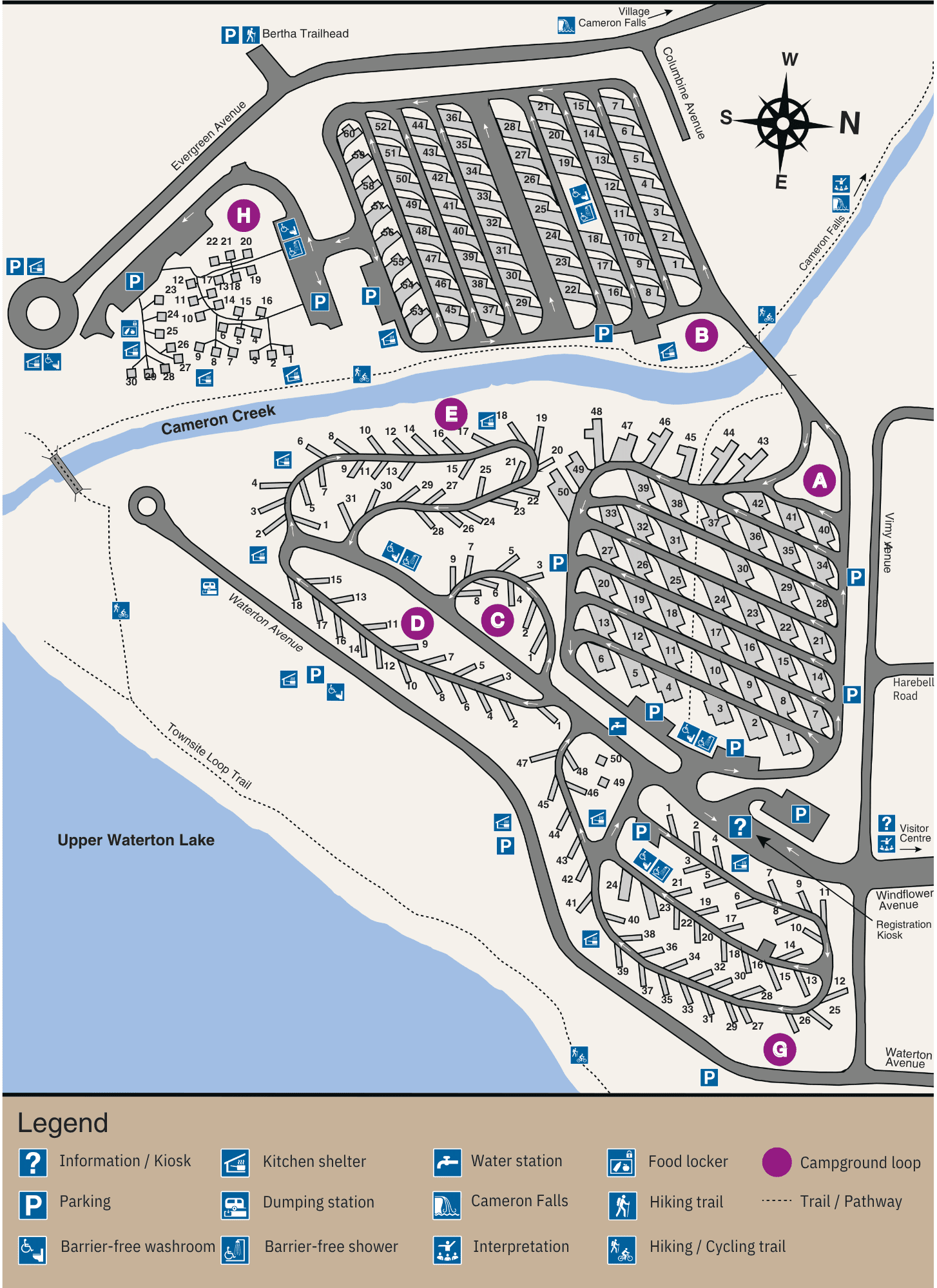
Waterton Townsite Campground has about 246 sites, spread out across a handful of loops. These Waterton campgrounds mix fully serviced, power-only, and unserviced options. You’ll find shared camp kitchens, washrooms, and showers—not exactly luxury, but they get the job done.
When you start researching Waterton Lakes National Park campgrounds, your experience really hinges on which loop you end up in.
Best Sites For Large RVs And Travel Trailers
If you’re hauling anything over 25 feet, start with the fully serviced loops. These sites give you water, sewer, and electrical hookups (15-amp, 30-amp, and 50-amp), so you can just set up once and relax for your whole stay.
There are around 110 fully serviced spots in sections a A and B, and they’re generally wider and more forgiving for bigger rigs. Pull-through sites are rare, so if you need one, you’d better book the moment reservations open.
There are 75 back-in sites which are electrical hook-ups only (15-amp and 30-amp). Most have gravel or paved pads on pretty level ground. You’ll find these spots in sections C, D and G. Always measure your total rig length (don’t forget the hitch!) and check it against the site dimensions on Parks Canada’s reservation system before you click confirm.
When To Choose Power-Only Or Unserviced Sites
The 75 power-only sites give you electrical hookups, but no water or sewer at your site. It works if you’ve got a decent freshwater tank and you don’t mind making a trip or two to the dump station.
For shorter stays—two or three nights—power-only sites save you a few bucks and still keep the fridge cold and your batteries topped up. The 61 non-serviced sites are for tent campers only.
What The Open Layout Means For Privacy And Comfort
This isn’t a cozy, tucked-away forest campground. Most loops sprawl across open, grassy ground with barely any trees between sites.
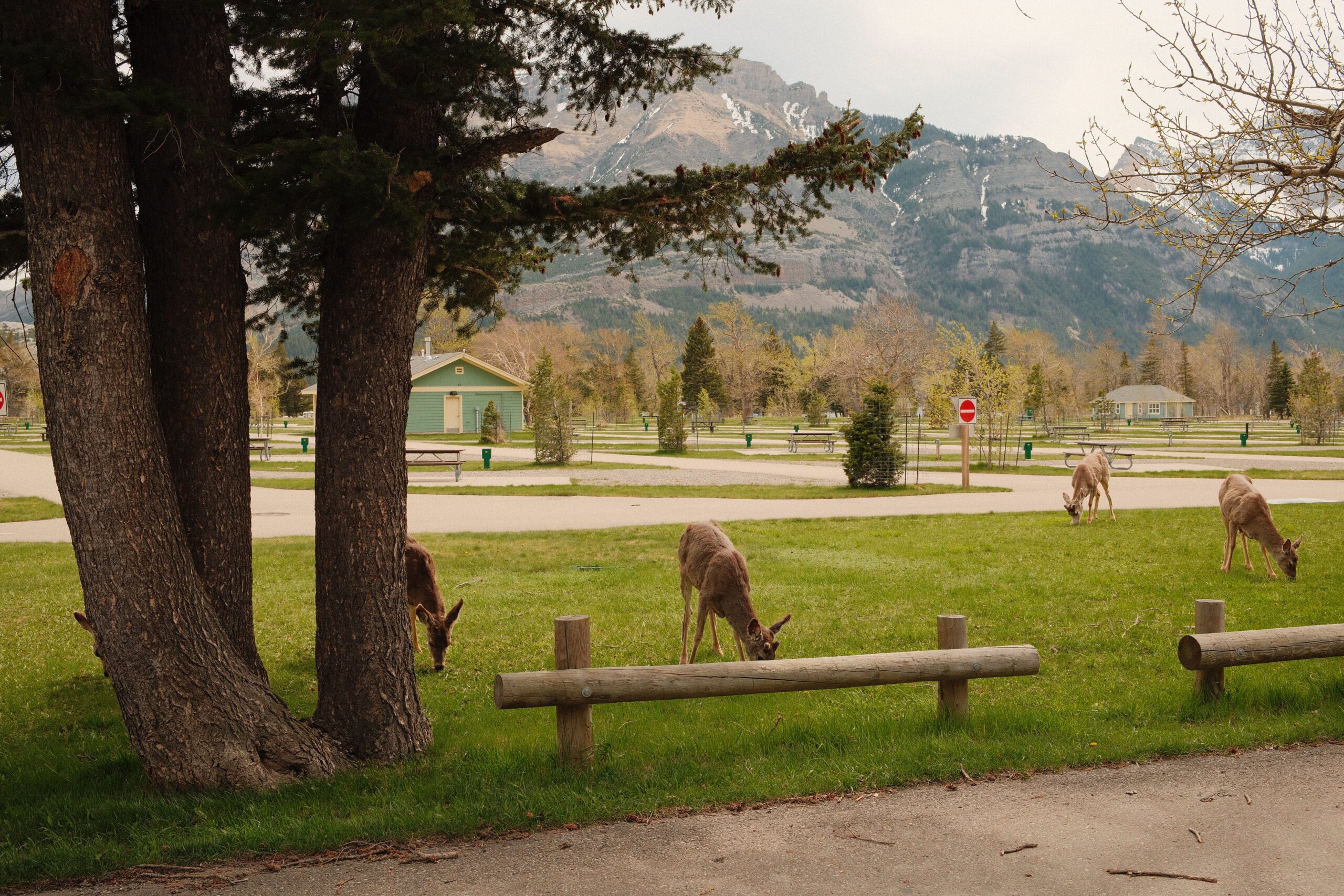
You’ll see your neighbors, and you’ll definitely hear them. If privacy matters, aim for perimeter sites along Cameron Creek or at the campground’s edge—at least you’ll get a buffer on one side.
The upside? You get those crazy mountain views in almost every direction, no trees blocking the scenery. The downside is pretty obvious: shade is rare on hot days, and the wind just barrels through without anything to slow it down.
Understanding The Loops, Hookups, And Site Layout
The campground is split into lettered loops, each with its own vibe and service level. Parks Canada runs the whole place, and you’ll book through their reservation system online or by phone. Knowing which loop suits your setup saves you a ton of frustration on arrival day.
Picking the right spot is half the battle when it comes to camping in Waterton.
Fully Serviced Areas For Easy Setups
Fully serviced loops are the way to go if you want a hassle-free stay. Water, sewer, and electrical connections at your site mean you skip hauling water jugs and waiting at the dump station on checkout morning.
These loops fill up first every summer, especially in July and August. If you’re camping with kids and want the simplest daily routine, fully serviced is worth the extra cost per night. You hook up, level out, and focus on exploring instead of managing tanks.
Power Access, Sewer Planning, And Water Expectations
Power-only loops give you a 15-amp and 30-amp connection, but that’s it—no water or sewer at your site. You’ll need to fill your freshwater tank before or after you park and plan your dump station visits based on your grey and black tank capacity.
The dump station inside the campground gets busy during checkout rushes, especially on Sunday mornings. Try to go early or midweek if you want to avoid a lineup. Potable water fill stations are scattered around, but honestly, bring your own drinking-water hose—don’t count on finding one lying around.
Access, Turning Space, And Parking Considerations
Most of the campground roads are paved or hard-packed gravel. Some interior loops have a pretty tight turning radius if you’re towing a long trailer, so take it slow and maybe even walk the loop before committing to a site if you show up without a reservation during first-come, first-served periods.
You can usually park your tow vehicle at your site, but space varies. On narrower sites, you might have to park the truck in front of or behind the trailer, not beside it. Having someone outside the vehicle to spot you makes backing in way less stressful, especially on busy weekends when every neighbouring site is full.
What RVers Need To Know About Waterton Wind
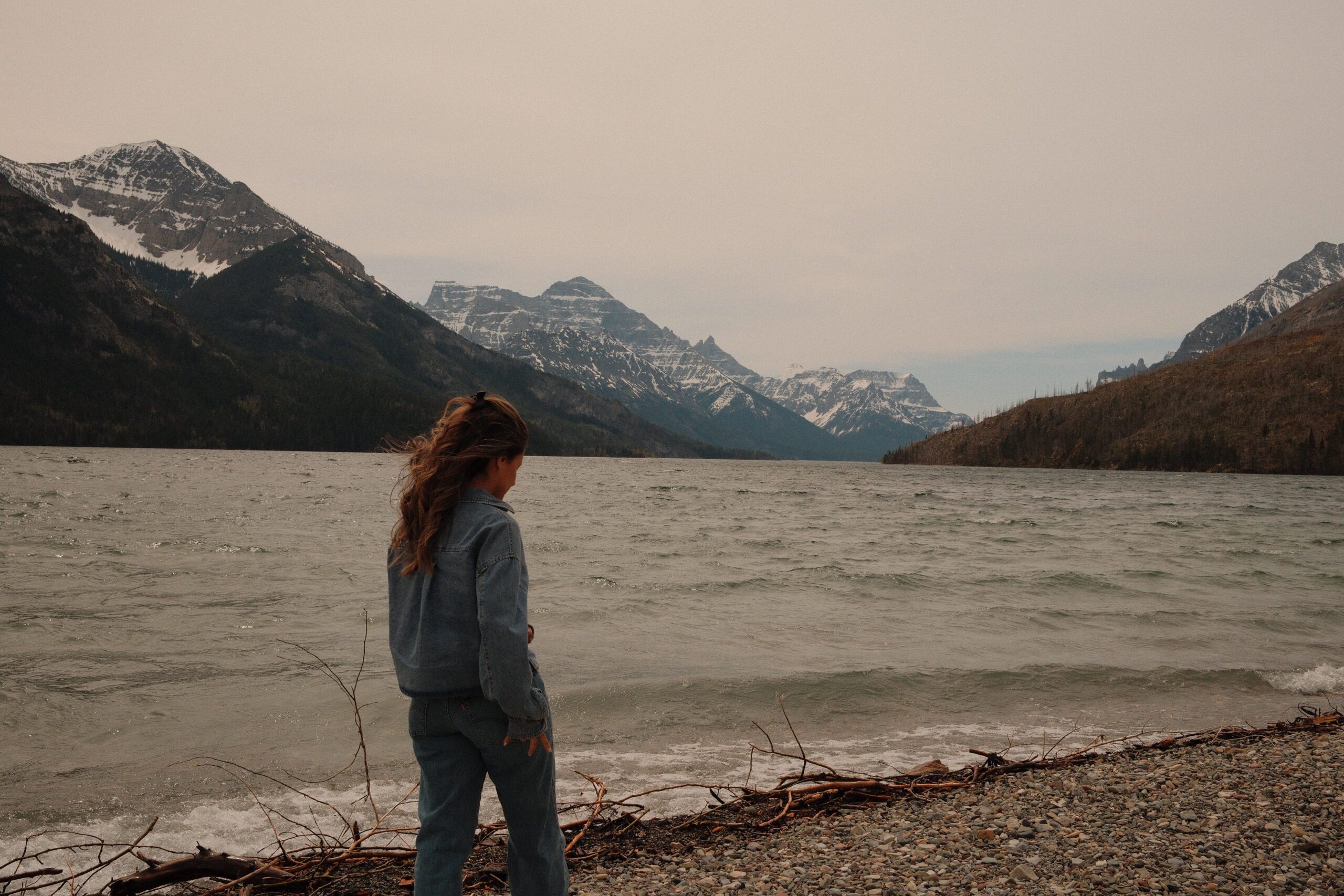
Waterton ranks as one of the windiest spots in the Canadian Rockies, and the campground sits right in the thick of it. Wind gusts here regularly hit 80 to 100 km/h with almost no warning.
This isn’t just a minor annoyance—it really changes how you camp.
How Wind Affects Site Position And Slide-Outs
Strong crosswinds put real stress on slide-outs, especially on bigger travel trailers and fifth wheels. If you see a heavy wind warning in the forecast, it’s smart to retract your slides until things settle down.
Try to park your rig so the narrow end faces the prevailing wind—usually from the southwest. That way, you’re not catching the full brunt of every gust. Some campers add extra stabilizer jacks or wheel chocks just for peace of mind.
With the open layout, nothing—no trees or buildings—blocks the wind for you. It’s just you and the prairie air.
Why Awnings And Loose Gear Need Extra Attention
Retract your awning unless you’re sitting right under it. One big gust can trash an RV awning in seconds, and replacements aren’t cheap.
Camp chairs, tablecloths, and lightweight cooking gear should always be stored or tied down. Even if it’s calm in the morning, conditions can change fast here. Make it a habit to secure everything before you head out for a hike.
Weather Expectations Through The Camping Season
Waterton Townsite Campground typically opens around May 1 and runs through mid-October. This is prime time for visiting Waterton National Park, as long as the weather cooperates. Early and late season can get chilly, with overnight lows sometimes dipping below freezing in May and September.
Snow isn’t out of the question at either end of the season. Summer days here are usually warm and pleasant, but the wind just never really lets up. There’s no true “calm season.”
Pack layers, bring a wind-resistant jacket, and plan meals you can make inside your trailer if you need to.
Winter camping here is a whole different ballgame. If you’re feeling adventurous, you can usually find primitive spots at Pass Creek day-use area, but expect minimal services and no running water.
Amenities, Walkability, And Everyday Convenience
Waterton Townsite Campground really punches above its weight compared to other Waterton Lakes National Park campgrounds when it comes to day-to-day convenience. The facilities are solid, and you’re only steps from town.
Many campers say that staying in Waterton is uniquely convenient compared to other mountain parks, since you can just leave your tow vehicle parked for most of your trip. That’s a big deal, honestly.
Washrooms, Showers, And Day-To-Day Facilities
The campground has flush toilets and coin-operated showers in shared washroom buildings. In peak season, Parks Canada staff keep them reasonably clean with regular maintenance, though I’d still bring flip-flops for the showers.
Early morning or late evening is your best bet if you want to skip a wait. There’s a camp kitchen with a covered shelter for meal prep on windy or rainy days—a real lifesaver when Waterton’s weather goes sideways mid-dinner.
Potable water taps and recycling stations are scattered throughout the loops. Just a heads-up: early May and late September (shoulder season) might mean fewer washroom facilities open.
Parks Canada closes some washrooms after Labour Day. During the first-come, first-served week in early May, you won’t find washroom or shower services at all, so plan accordingly.
Walking Or Biking Into Town Without Moving The Rig
This is honestly one of the best perks of Waterton Townsite Campground. You can walk or bike into Waterton Village in under ten minutes.
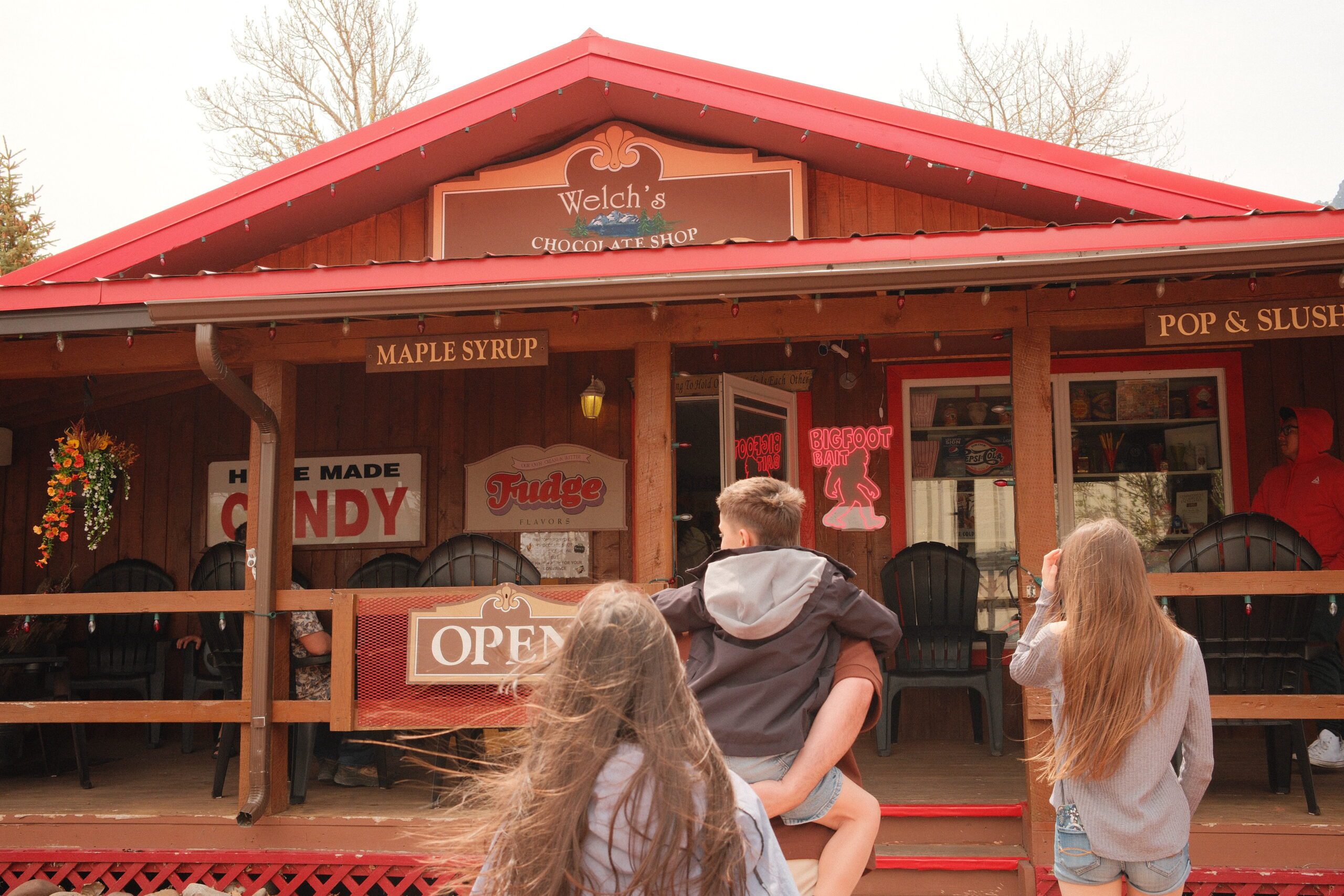
Restaurants, an ice cream shop, gift stores, and a small grocery are all within easy reach. For families with kids, this is huge—you don’t have to unhitch, hunt for parking, or squeeze a trailer down Waterton’s narrow streets.
Just leave your rig set up, grab a bike or stroller, and head into the village. The whole route is level and paved.
Easy Nearby Stops Like Cameron Falls And The Lakeshore
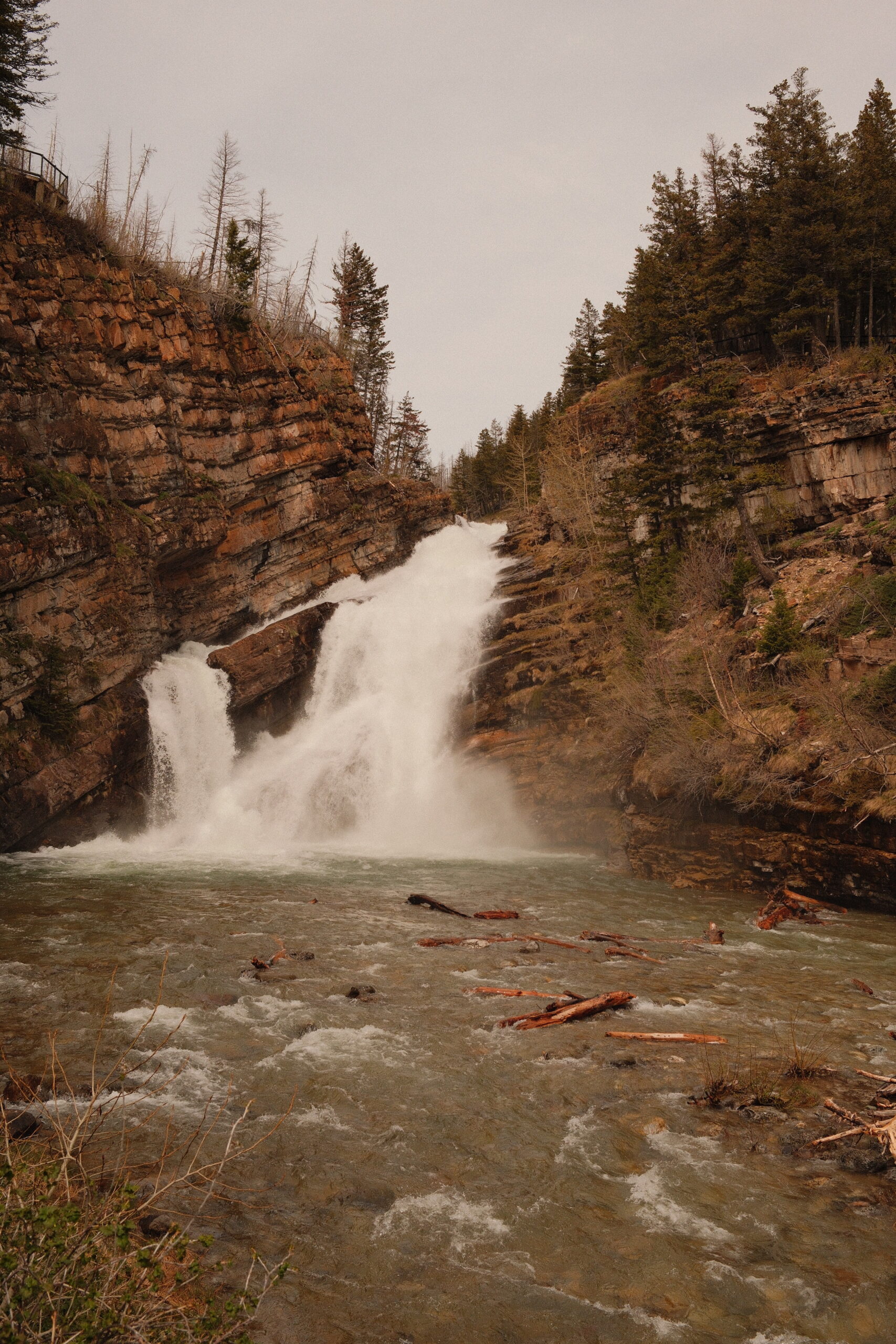
Cameron Falls is a quick walk from the campground, right at the town’s edge. It’s one of the most popular spots in Waterton Lakes National Park, and honestly, it’s worth seeing more than once since the flow changes with snowmelt and rain.
The lakeshore trail along Upper Waterton Lake starts near the townsite and gives you flat, easy walking with views across the water. You don’t need to drive to get there.
If you’re RVing with younger kids, having these attractions so close on foot keeps your daily schedule flexible and, honestly, a lot less stressful.
Wildlife, Food Storage, And Campground Etiquette
Waterton Lakes National Park is crawling with deer, bears, bighorn sheep, and all sorts of smaller critters. The campground isn’t fenced, so wildlife just wanders through whenever it pleases.
Honestly, keeping a clean campsite here isn’t really up for debate. It’s just how things work if you want to camp in this place.
Deer In The Campground And Occasional Bear Awareness
Mule deer show up more than anything else. They wander and graze through the campground every single day, and they barely seem to notice tents, trailers, or even kids zipping by on bikes.
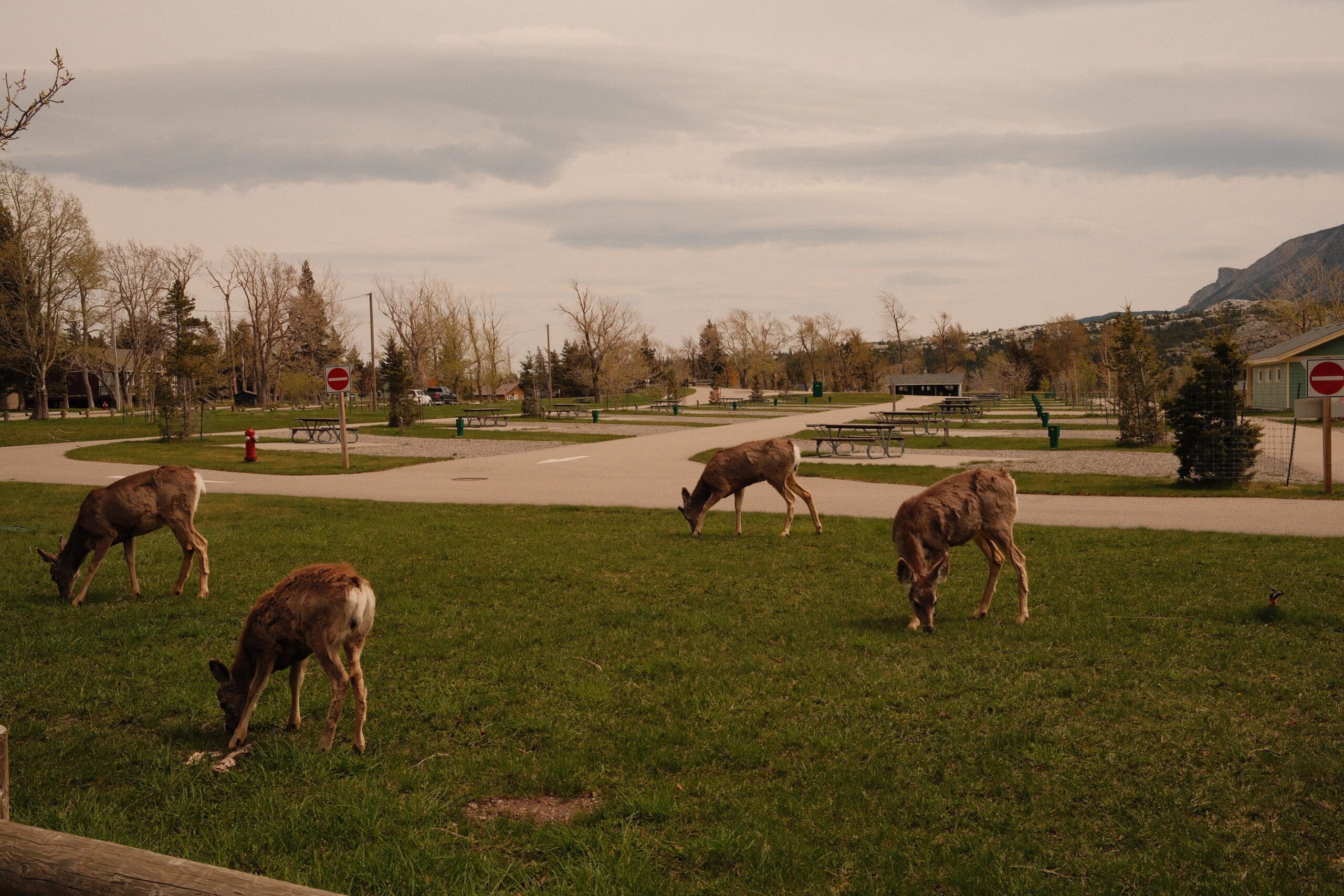
Still, they’re wild animals. Give them space, don’t feed them, and keep a close eye on younger kids when deer are hanging around.
As for bears, they’re not as common right in the townsite campground, but they do live in the park. Both black bears and grizzlies call the Waterton area home.
Parks Canada posts wildlife advisories, so it’s smart to check those before you head out for a hike. Better safe than sorry, right?
Keeping A Clean Site In A Busy National Park
Waterton has this “Bare Campsite” program that you’ll want to take seriously. When you leave your site—even just for a bit—anything that might attract wildlife has to be packed away.
That means food, coolers, dishes, garbage, pet food, and even stuff like scented toiletries go inside your RV or into the bear-proof storage bins they provide. No exceptions, really.
The staff enforces this rule, and honestly, it makes sense. “A fed bear is a dead bear”—it’s a tough phrase, but it’s true. If you get into the habit early on, it’ll feel pretty natural by your second day.
Throw your garbage in the bear-proof bins scattered around the campground. Don’t leave bags out overnight, not even tied to a picnic table.
Family And Pet Considerations Around Wildlife
Dogs have to stay on a leash at all times, everywhere in the campground and the rest of the park. Letting them run free can stir up wildlife and create problems for everyone. Even the calmest dog can make a deer bolt—or worse.
It’s worth chatting with your kids before you arrive about not approaching or feeding animals. Waterton’s deer get so used to people that kids sometimes think they’re friendly or tame. They’re definitely not. Keeping a respectful distance is really the safest bet for everyone.
Other Places To Camp In And Campgrounds Near Waterton Lakes
Waterton Townsite Campground is the main spot for RVs, but it’s not your only choice for camping in Waterton Lakes National Park. If you want something different, there are a few other Waterton Lakes National Park campgrounds worth checking out.
Honestly, exploring different campgrounds in Waterton helps you figure out what matters most—do you want more amenities, or are you chasing that real “out in nature” feeling?
When To Consider Belly River Campground
Belly River Campground is a smaller, more rustic spot inside Waterton Lakes National Park. It’s tucked along the Belly River near the park’s northeast entrance.
You won’t find hookups or showers here, and services are pretty limited. There’s a communal outhouse, and sites are all first-come, first-served—no reservations.
This place is ideal for tent campers or folks with small, self-contained RVs. Got a big trailer? It’s probably not going to work—the road is narrow, and turning around is a headache. What you get, though, is a quieter, more secluded vibe away from the busy townsite.
Red Rock Parkway and the Crandell Campground Area
Crandell Mountain Campground closed for good after the 2017 Kenow wildfire. Camping isn’t allowed there anymore, but the Crandell Lake area is still a favorite for recreation and scenic drives.
You can access the Crandell Lake trailhead from the parkway, and it’s a popular, easy hike for families. Even without camping, this corridor is a great spot for wildlife viewing and checking out the park’s unique geology.
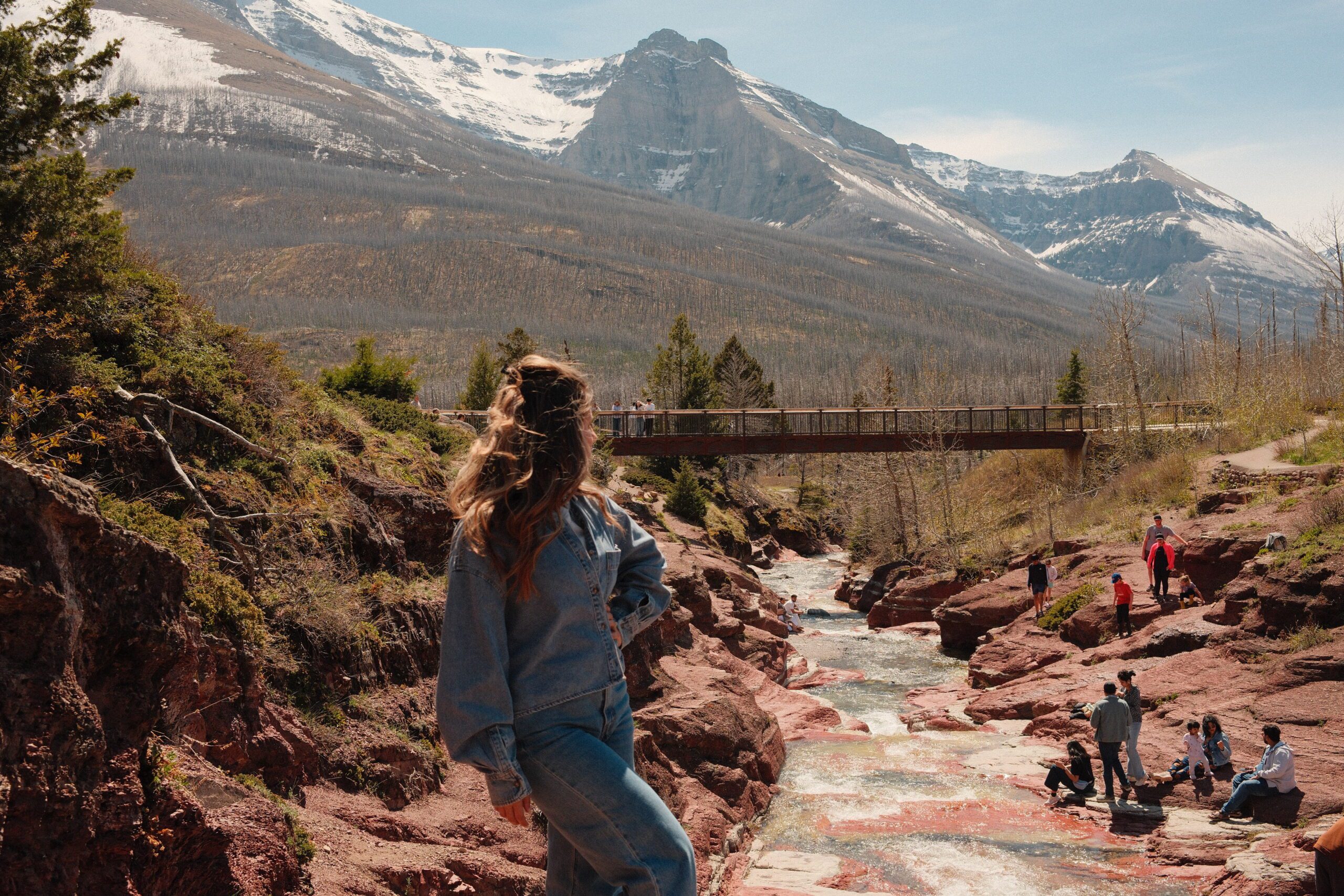
The Red Rock Parkway is another highlight—this road leads you out to the Red Rock Canyon day-use area. There, you can wander among those striking red shale formations or wade through shallow creeks. It’s a fun spot, especially on a hot afternoon.
Private And Nearby Alternatives Outside The Park
When every site inside the park is full (and that happens a lot), you’ll find several private and provincial campgrounds within a reasonable drive. Plenty of people search for Waterton Lakes National Park campgrounds only to get shut out, so these nearby options can be a lifesaver.
The towns of Pincher Creek and Crowsnest Pass both have RV parks with full hookups. There are some high-quality campgrounds near Waterton Lakes that are definitely worth considering.
Crooked Creek Campground sits just east of the park gates and makes a solid backup plan. It’s a reliable overflow for the main Waterton Lakes National Park campgrounds, especially on busy weekends. Staying at Crooked Creek keeps you close to the park but helps you dodge the townsite crowds.
Provincial campgrounds in the area offer over 400 sites, and many can be reserved online. These campgrounds near Waterton Lakes make a great base for day trips, and you don’t have to stress about booking as much. Expect a 30- to 60-minute drive to the townsite from most of these alternatives, though.
Frequently Asked Questions
Which waterton lakes national park campgrounds are open and what are their opening and closing dates?
Waterton Townsite Campground opens from May 1 to October 12, 2026, if the weather cooperates. After those dates, only the brave stick around for winter camping.
Belly River Campground runs on a shorter season, usually opening later in spring and closing earlier in the fall. Check the Parks Canada site for the exact dates—they can shift a bit depending on the year.
How do I reserve a campsite, and are there first-come, first-served sites available?
You can book reservations through the Parks Canada reservation system online or by calling 1-877-737-3783. The reservation window for 2026 is open from May 8 to September 21. If you want a spot, it’s best to book as soon as you can—these sites go fast.
There are first-come, first-served sites available from May 1 to May 8, and then again from September 22 to October 12. Just register at the campground kiosk when you arrive during those periods.
What are the camping fees, and what does the Parks Canada reservation fee include?
Nightly fees depend on what kind of site you want. Fully serviced sites with water, sewer, and power cost more than power-only or unserviced sites.
Parks Canada adds a non-refundable reservation fee to whatever the nightly rate is. You also need a valid national park entry pass for everyone in your group. The Parks Canada reservation site always has the latest pricing.
What services and amenities are available at each campground (showers, flush toilets, power, water)?
Waterton Townsite Campground has flush toilets, coin-operated showers, a camp kitchen, and sites with up to full hookups. Belly River Campground is much more basic—just an outhouse, no showers, and no power.
During the shoulder season at the townsite, you might find that washroom services are reduced. It’s always a good idea to double-check before you go.
What are the rules for food storage, wildlife safety, and campfires while camping in the park?
Waterton uses a “Bare Campsite” program. You have to store all food, coolers, garbage, and scented items in your RV or in the bear-proof bins whenever you leave your site.
Campfires are only allowed in designated fire pits, and sometimes fire bans come into effect if things get too dry. Always check with Parks Canada for the latest fire restrictions before you light up a campfire.
What size of RV or trailer can each campground accommodate, and are there pull-through sites?
Waterton Townsite Campground welcomes pretty much any size of RV, from small campers to those big travel trailers and motorhomes. Out of all the Waterton Lakes National Park campgrounds, its fully serviced loops seem to get the most attention—can’t really blame folks for that.
They do have pull-through sites, but honestly, there aren’t many. If you want one, you should probably try to book as early as you can.
Belly River Campground mainly works for tents and smaller self-contained units. Since Crandell Mountain Campground remains closed, anyone with a larger RV will want to stick with the Townsite Campground for now.
Great content! Keep up the good work!