
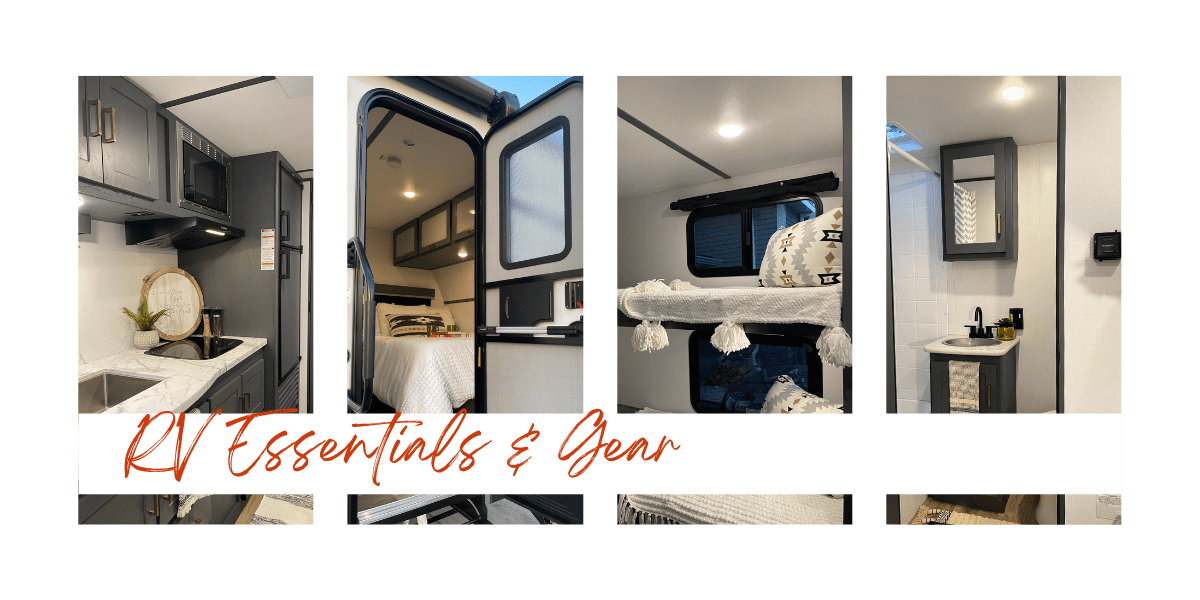
The Ultimate Guide For RV Essentials In The Canadian Rockies
Packing the right RV essentials and gear before heading into the Canadian Rockies honestly makes the difference between a relaxing family trip and a stressful mess of burst pipes, dead batteries, or even unwanted bear encounters. Whether you’re towing a travel trailer, driving a Class A motorhome, or road-tripping in a Class C, the mountains demand gear that most generic packing lists just don’t mention.
This guide is for families, first-time RVers, and seasoned travellers who want a list of RV must-haves that are actually helpful. If you’re after RV essentials for beginners visiting Banff, Jasper, Kananaskis, Waterton, or any mountain campground in between, you’ve come to the right place.
What sets this list apart? Every single recommendation comes from real trips through the Rockies, not just some warehouse product page. You’ll find out which hookup gear actually protects your rig from common campground headaches, which dry camping tools keep you comfortable off-grid, and which safety items are non-negotiable in bear country.
we’ve packed in advice from years of family RV travel in Alberta’s mountains—including the mistakes that hurt the most. If you want a resource that combines local Rockies know-how with hands-on RV experience, Along The Rockies covers everything from campground reviews to printable checklists you can grab before your trip.
Key Takeaways
- Mountain RVing calls for specialized gear—think unpredictable weather, wildlife, and campsites with limited or no hookups. You really can’t just wing it.
- Sanitation, leveling, and electrical protection items aren’t optional in the Rockies. They save you from the most common (and expensive) trip disasters.
- Packing for four seasons—even in summer—and carrying bear safety gear are two things that separate prepared travellers from those who end up cutting their trips short.
Why Mountain RVing Requires Specialized Gear
A standard RV packing list will get you through a flat, full-service campground in Southern Ontario. But it won’t prepare you for what the Canadian Rockies throw at you.
The weather? That’s the first challenge. You might wake up to 25°C sunshine in Banff and then face near-freezing temperatures by evening. July snowfall along the Icefields Parkway corridor isn’t unusual. Rain, hail, and high winds can roll in within minutes, and your gear has to handle all of it.
Hookup availability is the next challenge. Loads of the best campsites in national and provincial parks are dry camping only. That means no electricity, no water hookup, and no sewer connection. Even full-service sites in places like Kananaskis sometimes deliver inconsistent power or high-pressure water lines that can damage your RV plumbing.
If you’re not equipped for full-time RV living off-grid, you’ll run out of power or water way faster than you’d expect. Having the right RV accessories on hand makes these transitions so much smoother. You get to enjoy the wilderness without giving up basic comforts.
And then, there’s the wildlife. Grizzly bears, black bears, elk, and cougars—they’re all part of the landscape here. Parks Canada enforces strict food storage rules, and honestly, travelling without bear spray is risky. You need to think about wildlife with your campsite setup, cooking, and waste management.
Mountain campsites are also rarely flat—lots are carved into hillsides and covered in gravel or loose dirt. Steep grades on highways like the Trans-Canada through Kicking Horse Pass put real stress on tires and brakes. All these realities mean you need gear that goes beyond the basics.
Essential RV Hookup & Utility Gear
Getting connected at a Rockies campground is rarely straightforward. Electrical pedestals can be ancient, water pressure can spike dangerously high, and sometimes you’ll only get partial hookups. The right utility gear protects your rig and keeps your systems running safely from the minute you arrive.
Electrical Must-Haves for Campgrounds
An RV surge protector is, hands down, the most important electrical accessory you can own. A reliable surge protector shields you from electrical spikes, which are surprisingly common in older mountain campgrounds.
Campground wiring in the Rockies often delivers inconsistent voltage, reversed polarity, or dangerous surges. A high-quality electrical management system (EMS) monitors incoming power and cuts the supply before it fries your air conditioner, fridge, or converter.
Look for a hardwired or portable EMS that matches your rig’s amp service. Always check your primary RV power cord for wear before you leave. If your travel trailer runs on 30 amps but you pull into a site with only a 50-amp pedestal, you’ll need a 50-to-30 amp dogbone adapter. The reverse happens too, so carrying both adapters just makes sense.
A heavy-duty RV extension cord rated for your amperage is also a smart addition. Some Rockies campsites put the power pedestal at the far end of the pad, and your factory cord just won’t reach.
Water System Protection
Honestly, a water pressure regulator isn’t optional in the Rockies. High-quality water pressure regulator models let you monitor the flow and keep your internal plumbing safe.
Municipal water pressure in towns like Canmore sometimes runs well above 80 PSI. That kind of force can burst PEX pipes and fittings inside your RV. A quality regulator keeps pressure in the safe 40 to 60 PSI range and protects your entire plumbing system for just a few bucks.
Pair it with a freshwater hose or a drinking water hose rated for potable use. High campground water pressure is common in mountain parks, so a heavy-duty RV water hose is a must. A white or blue NSF-certified hose keeps chemicals out of your water supply.
If you’re camping in April, May, September, or October, a heated fresh water hose prevents freeze-ups during those cold overnight dips. An inline water filter or a beefier RV water filter rounds out your setup. These filters remove sediment and improve taste from campground taps, which can deliver some pretty mineral-heavy water.
RV Sanitation and Bathroom Essentials
No one likes thinking about waste management, but mess it up in the Rockies and you’ll deal with odours in your rig and maybe even tank damage. The right sewer kit and tank care products keep everything clean, functional, and—honestly—less gross.
Sewer Hoses and Attachments
A heavy-duty RV sewer hose kit is worth every penny. Thin, cheap hoses crack after a few uses, especially when you drag them over the sharp gravel that’s everywhere at mountain campsites.
The Camco RhinoFLEX sewer hose is a favourite because its bayonet fittings lock tightly and resist punctures. Using a sewer hose support keeps your lines angled right for gravity drainage.
Always bring a clear sewer hose elbow attachment. It connects to the dump station inlet and lets you see when your tank is flushing clean. This little piece saves you from guessing whether your black tank is actually empty. Having a high-quality sewer hose elbow means you get a secure, leak-proof connection when dumping.
Disposable gloves are a must every time you dump. Leave a box in your sewer hose compartment so you never have to handle connections with bare hands.
RV Toilet Paper and Tank Treatments
You absolutely need RV-safe toilet paper that dissolves quickly. Regular household toilet paper doesn’t break down fast enough and will eventually clog your black tank. Using RV-safe toilet paper avoids backups you really don’t want to deal with at a remote Rockies campsite.
Tank treatments matter just as much, especially during hot July and August trips when waste breaks down faster and odours get worse. High-quality enzyme-based drop-ins like Happy Campers work way better than chemical treatments. They break down solids, eliminate smells, and are safe for dump stations in national parks.
Drop one tablet into your black tank after every dump and add water. That simple step keeps your bathroom smelling fresh for the whole trip.
Leveling & Stabilization Gear for Uneven Sites
Mountain campsites just aren’t flat. Whether you’re in a provincial recreation area in Kananaskis or a Parks Canada campground in Jasper, you’ll probably get sloped, rocky, or rutted pads that make RV leveling a must every single time.
Leveling Blocks and Ramps
Stackable leveling blocks are the go-to solution for most folks. Carrying a set lets you build up height one block at a time under each tire. Interlocking designs like Lynx Levelers are tough and easy to store. These work well for moderate slopes.
For steeper sites, curved levelers like the Anderson Leveler make things faster and more stable. You just drive onto the ramp until a built-in level indicator says you’re flat, then chock and you’re done. These are especially handy for tandem axle trailers where getting both axles level can be a pain. As several RV leveling guides point out, picking a system rated for your rig’s weight is critical—undersized blocks can crack under load.
Don’t forget jack pads for your stabilizer jacks. Soft ground and gravel are everywhere in the Rockies, and bare jack feet will sink in overnight.
Chocks and Stabilization
Sturdy rubber wheel chocks need to be on your packing list every trip. Place these RV wheel chocks on the downhill side of your tires before you unhitch or level. If you don’t use RV wheel chocks, your trailer could roll or shift unexpectedly. Dedicated wheel chocks grip gravel better than the plastic ones, honestly.
If you tow a tandem axle trailer, X-chocks are a serious upgrade. They wedge between the two tires on each side and stop the rocking motion that happens every time someone walks through the rig. That bounce is annoying at best and, at worst, can shift your trailer off its leveling blocks.
Dry Camping (Boondocking) Essentials
Some of the most scenic Rockies campsites have zero hookups. Crown land sites, overflow camping areas, and even some designated Parks Canada campgrounds offer nothing but a gravel pad and a fire ring. If you want to stay in these spots, you’ve got to be self-sufficient with power, water, and waste.
Portable Power Solutions
Let’s be honest: a quiet portable generator makes dry camping in the Rockies so much easier. The key word? Quiet. Parks Canada really enforces noise regulations, and a lot of campgrounds ban generators at night.
But there’s another way. A portable power station lets you run small electronics silently overnight. You can charge laptops and phones without firing up a noisy generator, which is a relief for everyone around you.
If you want something that covers your basics—lights, phone chargers, a small fridge, even a CPAP—a 2,000-watt inverter generator from Honda or Yamaha usually does the trick. They hum along at conversation-level volume, so you don’t feel like you’re camping next to a lawnmower.
If you’d rather skip the noise altogether, a solar kit keeps your batteries topped up on those long summer days. A portable solar panel suitcase in the 100 to 200-watt range covers most people’s needs, honestly. Pair it with a charge controller and you get free, silent power whenever the sun’s out.
I always bring extra propane tanks for heating and cooking off-grid. Propane keeps your furnace going on those freezing mountain nights. Just make sure your tanks are certified and full before heading into the backcountry. If you need to stay online, a mobile hotspot can be a lifesaver when campground Wi-Fi drops out (which, let’s face it, happens a lot).
Water and Waste Management Off-Grid
A portable waste tote—some folks call it a honey wagon—quickly becomes your best friend when you’re dry camping. You can wheel your grey and black tank waste to the nearest dump station without tearing down camp. In the Rockies, where good boondocking spots are rare and precious, this lets you hang onto your site a few extra days.
I always pack a couple of collapsible fresh water jugs (15 to 20 litres each) for refilling my RV’s tank from campground spigots or town water stations. Two jugs usually buy you at least another day or two before you have to move your rig.
Outdoor Living and Campsite Comfort
Your campsite turns into your living room out here. The right outdoor gear can turn a gravel pad surrounded by pines into a spot where your family actually wants to hang out—at least for a while.
Outdoor Mats and Rugs
A big, breathable outdoor RV mat is honestly one of the simplest upgrades you can make. Rockies campsites are almost always a mix of dirt and gravel, and it takes maybe an hour before pine needles, mud, and rocks start sneaking into your rig.
Put a mat at your entry door and you’ll catch most of that mess before it gets inside. I recommend a breathable weave so water drains and the mat dries fast after rain. An 8-by-16-foot outdoor rug fits most travel trailers and gives you a clean spot for your chairs. If you want extra comfort, try adding a screen room to keep mosquitoes off your picnic table. You might want to bring an outdoor grill too—nothing beats cooking in that mountain air.
Camp Chairs and Portable Fire Bowls
Zero-gravity lounge chairs? Worth every penny. After hiking in Kananaskis or wandering around Banff, I really appreciate a chair that supports my back and lets me actually relax. Cheap folding seats just don’t cut it for me anymore.
If I had to pick one outdoor item for Rockies camping, I’d go with a portable propane fire pit. Fire bans are super common across the Canadian Rockies in summer, and when there’s a ban, wood fires are completely off-limits. With a propane fire bowl, you still get the warmth and ambiance (and s’mores!) without breaking any rules. It lights instantly, doesn’t throw sparks, and shuts off clean. Honestly, on a lot of our summer trips, it’s been the only way we’ve had a fire at all.
Mountain Safety & Wildlife Gear
Staying safe in the Rockies takes more than a first aid kit. You’re sharing space with big predators and driving some gnarly grades that can punish any unprepared vehicle. The right gear keeps your family safe on the trail and on the road.
Bear Safety Essentials
Bear spray is non-negotiable for any outdoor activity in the Canadian Rockies. Everyone old enough to use it should carry a can in a proper hip holster—don’t bury it in a backpack, seriously.
If you cook outside, stash all food, coolers, and anything scented in bear-safe containers or inside your sealed vehicle. Parks Canada has no patience for improper food storage, and a bear that gets into human food often ends up relocated or worse.
Check the expiry dates on your bear spray before each trip. Canisters usually last two to four years, and an expired one might not work when you need it most. I keep one at the campsite and another in the vehicle for trailhead stops—just in case.
Driving Safety Tools
I swear by a tire pressure monitoring system (TPMS) for mountain RV travel. Steep grades like the descent into Golden can really stress your tires, and I’d rather catch a problem before it turns into a blowout.
A backup camera and an RV-specific GPS (designed for big vehicles) make navigating narrow mountain highways a lot less stressful. Those dedicated RV GPS units actually factor in your vehicle’s height and weight, which is something Google Maps just doesn’t do.
Using an RV GPS helps you avoid low bridges and routes that are too steep for your rig. Trust me, relying on a specialized GPS is a lot safer than a standard phone app—especially when you lose signal.
Pack an emergency road kit: tire pressure gauge, reflective triangles, flashlight. I also throw in a good headlamp for hands-free repairs or late-night hookups. Having a headlamp just makes everything easier after dark. Don’t forget jumper cables and a few basic fuses for electrical troubleshooting.
Bring a small tool kit for RV maintenance—screwdrivers, pliers, adjustable wrench. Having a full set of RV tools means you can fix loose screws or make minor adjustments on the fly. Robertson bits are essential, since Canadian RVs use square-drive screws that you won’t find in most generic tool kits.
Rockies Clothing & Inside Packing List
Packing for the Rockies means planning for all four seasons, sometimes in one trip. You also have to organize the inside of your rig for bumpy roads and tight storage—otherwise, chaos.
Four-Season Clothing
Mountain evenings get cold, even in July. Up in Jasper or along the Icefields Parkway, temps can drop to 2°C or 3°C after sunset. I pack thermal base layers, fleece mid-layers, and a solid waterproof jacket for everyone—no exceptions.
Toques (beanies) and warm gloves are a must year-round. Afternoon thunderstorms show up all the time from June to August, and if you get caught on a trail in cold rain without proper layers, you’ll be shivering in no time.
Waterproof hiking boots or shoes work way better than runners for the terrain you’ll actually face out there.
Kitchen and Interior Organizers
Bumpy mountain roads shake everything inside your rig. I use tension bars or bungee cords across fridge shelves to stop food and drinks from flying out when I open the door at camp. It’s saved me from more than one ketchup disaster.
Shatterproof dishes and cups are a must. Glass and ceramic just don’t survive the vibrations on roads like Highway 93 South through Kootenay National Park.
Nesting bowls and stackable containers save a ton of cabinet space. I use command strips to hang utensils or coats—honestly, they’re perfect for RVs because they stick without ruining the walls. A sturdy cast iron skillet works for both the stovetop and the campfire. And don’t underestimate a good RV mattress topper (or a full replacement). If you keep waking up with a sore back, it might be time to invest in a better mattress built for the road.
Factory mattresses in most travel trailers are thin and pretty uncomfortable. Upgrading your sleep surface is honestly one of the best comfort investments you can make. A quality RV mattress gives you the support you need for a solid night’s rest in the mountains.
Frequently Asked Questions
What should a first-time RV owner pack for a weekend trip?
Start with the non-negotiables: fresh water hose, water pressure regulator, sewer hose kit, RV surge protector, leveling blocks, and wheel chocks. Add RV toilet paper, a basic tool kit, a first aid kit, and bear spray if you’re heading into the Rockies. These cover hookup, sanitation, and safety for a short trip—without overloading your storage.
Which safety and emergency items should always be kept in an RV?
Keep a fire extinguisher, carbon monoxide detector, bear spray (if you’re in the Rockies), reflective triangles, a flashlight, and a fully stocked first aid kit in your rig at all times. A tire pressure gauge or TPMS and jumper cables round out your emergency road kit. These items cover the most common and most serious situations RV travelers run into.
What maintenance tools and supplies are most useful to carry on the road?
A basic tool kit with screwdrivers, pliers, adjustable wrench, Robertson bits, duct tape, zip ties, and spare fuses covers most minor repairs. Honestly, duct tape and zip ties are the real MVPs for temporary fixes. I keep extra rolls and various sizes on hand—it’s saved me more than once when a small part broke unexpectedly. A digital multimeter helps diagnose electrical gremlins. RV sealant (like Dicor) is perfect for patching small roof or window leaks before they turn into big headaches. These supplies handle the repairs that come up most often on real trips.
What kitchen and food-storage items are most practical for RV travel?
Shatterproof dishes, nesting pots and bowls, a compact cutting board, and stackable food storage containers are my go-tos. I use fridge tension bars to keep everything secure on the road. One good knife, a basic utensil set, and a compact coffee maker cover daily cooking needs without hogging precious space.
What toiletries and bathroom supplies are commonly forgotten when packing an RV?
RV-specific toilet paper is the thing people forget most, and using regular stuff can clog your black tank. People also forget tank treatment tablets, a shower caddy for tiny bathrooms, and a mildew-resistant shower curtain. Quick-dry towels and a small squeegee for wiping down shower walls after use help keep mould out of your RV’s cramped bathroom space.
Where can I find a printable RV packing checklist in PDF format?
Along The Rockies has this downloadable RV camping checklist, which covers everything from RV inspection to safety gear and those must-have accessories—especially if you’re heading out into the Rockies. I honestly think a good RV camping checklist helps you avoid forgetting little lifesavers like your water regulator or leveling blocks. You’ll find that several other RV resources also share printable checklists for general RV camping. If you ask me, it’s smart to look for a checklist you can tweak for your own rig and trip length, rather than just grabbing some generic list that claims to fit everyone.