
Happy Camper tank treatment, one of the most effective black tank treatments out there, uses a mineral-based formula that knocks out odors and breaks down waste. This RV tank treatment tackles both black and grey water holding tanks, so you can finally get rid of those stubborn RV smells.
This non-toxic, environmentally friendly formula neutralizes odour-causing gases and stops residue from building up, so it keeps working even in wild temperature swings over 38°C.
Unlike enzyme-based treatments that just give up in hot weather, this mineral-based RV holding tank treatment keeps doing its job whether you’re sweating it out in summer or storing your rig for the winter.
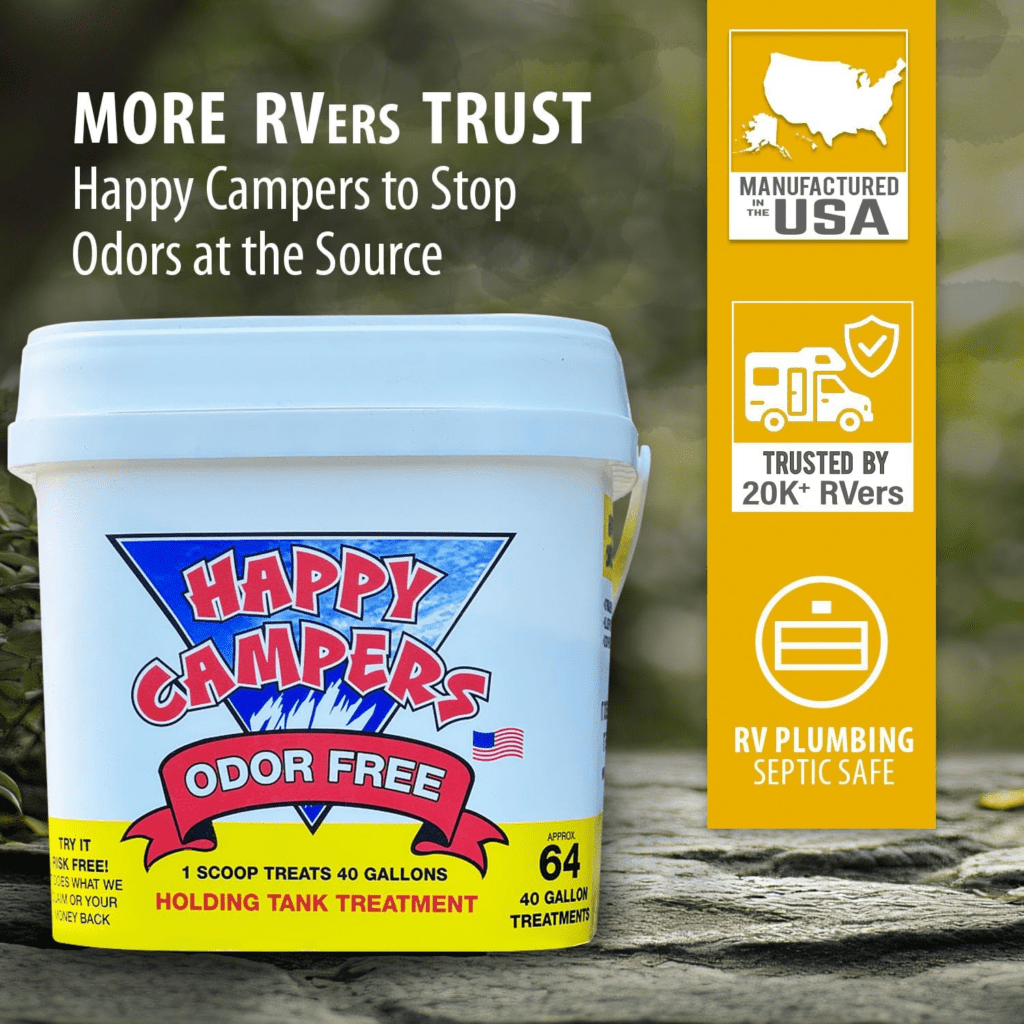
If you’ve ever fought with holding tank odor or had your sensors stop working because of gunk, you know how annoying RV waste management gets. Persistent RV black tank odor can turn a fun camping trip into a nightmare fast. Using a high-quality Happy Campers tank treatment really helps you get on top of those common RV odors.
This guide walks you through exactly how Happy Camper works, how to use it right, and whether it’s a good fit for your RV compared to other stuff out there.
You’ll see the actual dosing instructions for different tank sizes, some common mistakes that mess with results, and practical tips to keep your tanks odour-free all year. Whether you just head out for the weekends or live in your RV full-time, learning how to treat your holding tanks the right way will make your travels a heck of a lot more comfortable.
I remember we were on our first camping trip ever and I ignorantly forgot to put treatment in and never closed the tanks while hooked up to our campsite. This was a nasty mistake I’ll never make again. However, it led me to use Happy Camper tank treatment and it works amazing!
Key Takeaways
- Happy Camper uses a mineral-based formula for an odorless holding tank treatment and stops waste buildup—no harsh chemicals needed
- The treatment takes care of both black and grey tanks and keeps working in extreme temperatures and storage
- Getting the dose and tank hydration right is crucial for best results and to avoid sensor headaches
This Post Is All About Happy Camper Tank Treatment
Disclosure: Some of the links in this post are ‘affiliate links’. This means if you click on the link and purchase the item, I will receive an affiliate commission.
What Is Happy Camper Tank Treatment?
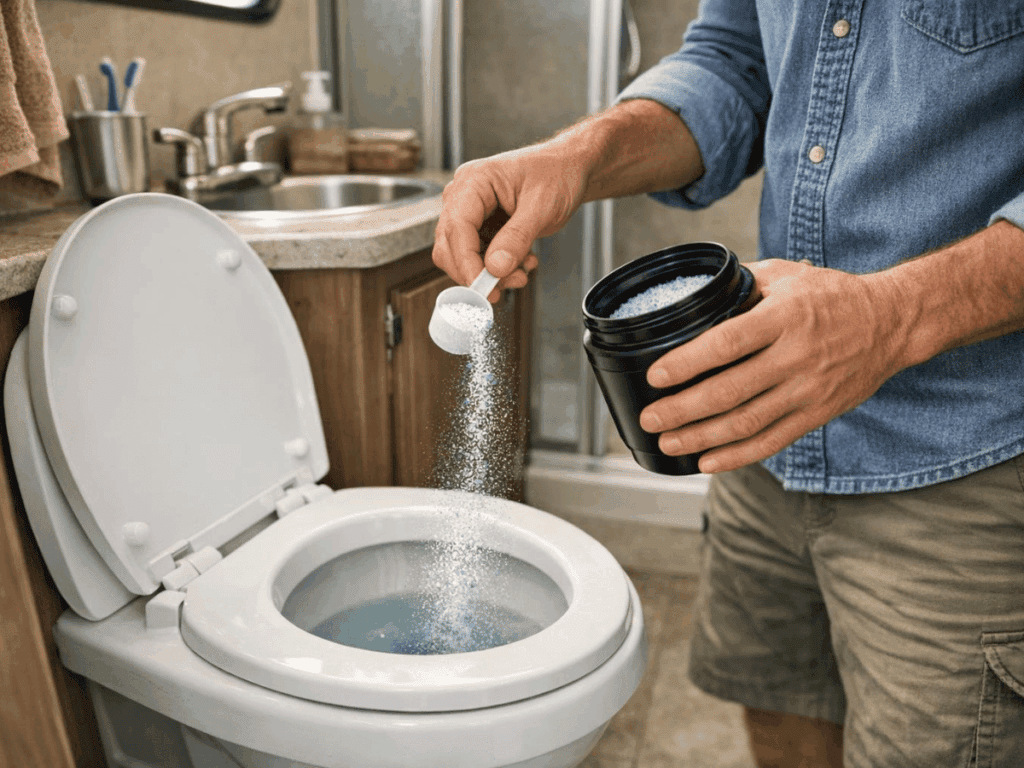
Happy Campers holding tank treatment comes as a mineral-based powder, and a lot of travelers swear by it as the most reliable RV tank treatment you can buy. It knocks out odours and breaks down waste in black and grey water holding tanks. The formula relies on natural minerals and micronutrients to keep smells at bay and block buildup.
Ingredients and Mineral Formula
Happy Camper holding tank treatment packs a super-concentrated monohydrate blend of minerals and micronutrients. There are nine trace elements and two heavy elements in the mix, all of them working together once you add water.
Instead of using formaldehyde or other harsh stuff, this non-toxic and biodegradable treatment plays nice with RV plumbing and septic systems. You won’t find any perfumes, dyes, or enzyme systems in this powder.
The mineral blend makes an environment where odour-causing bacteria just can’t thrive, but good bacteria can. That means the treatment does its thing without wrecking your tank sensors or seals.
I’ve used a lot of treatments over the years, this is a staple for us. Most common brands found in big box stores only mask the smell but does a crappy job as keeping the tanks cleaned.
How the Treatment Works
The treatment gets to work right away after you mix it with water and pour it in your tank. The water-activated minerals create the perfect conditions for beneficial aerobic bacteria to do their thing.
These good bacteria break down solids and basically outcompete the stinky anaerobic bacteria. The process just keeps going until you dump your tanks, so you don’t have to keep adding more between dumps.
Just mix a scoop of powder with about a gallon of water for a standard 40-gallon tank. If you’ve got a bigger tank or you’re camping in a hot climate, bump it up to two scoops and three gallons of water. The treatment keeps working in temps over 38°C and even in the cold.
Odour Elimination Process
The minerals in Happy Camper don’t just cover up smells with perfumes. They actually wipe out odours at the source by blocking the bacteria that make hydrogen sulphide and other nasty gases.
When you toss the treatment in your tank, it immediately starts breaking down whatever’s already in there and makes life tough for the stink-causing bacteria. This dual-action approach handles both the current mess and helps prevent future problems.
The treatment keeps working even if your RV sits in storage or you go a long time between dumps. You won’t get hit with chemical or sewer smells inside, and the formula helps stop that sensor-clogging buildup that gives you bogus readings on your tank monitors.
Benefits of Using Happy Camper Tank Treatment

Happy Camper tank treatment tackles the biggest headaches RV owners have with their holding tanks. The mineral-based formula goes after odour control, waste breakdown, sensor accuracy, and tank upkeep whether you’re using your RV all the time or letting it sit for a while.
Eliminates RV Odours
The main win with Happy Camper is how well it neutralizes holding tank odour and gets rid of those RV smells that can sneak into your living area. The mineral-based formula doesn’t just mask things with perfumes—it actually stops odour-causing gases at the source instead of just covering them up.
Chemical treatments usually quit in hot weather, but this stuff keeps working in temps over 38°C (100°F). You won’t get that classic sewer smell that happens when other treatments break down in the heat.
The treatment skips harsh chemicals like formaldehyde or bronopol. So you get odour control without worrying about exposing your family to sketchy substances while you’re camping.
Promotes Effective Waste Breakdown
Happy Camper relies on a concentrated blend of minerals and trace elements to break down solid waste in both black and grey water tanks. One scoop treats up to 40 gallons, so it’s pretty economical for regular use.
A lot of travelers call this the best black tank treatment because it liquefies most toilet paper and cuts down on gunk sticking to tank walls. That means fewer clogs and easier dumping.
You can stretch out your dump intervals since the treatment just keeps working between applications. That’s a lifesaver if you’re boondocking or camping somewhere without full hookups for a while.
The powerful odour control and waste breakdown work together to keep your tank in better shape. Good bacteria thrive in the balanced environment the minerals set up.
Prevents Sensor Malfunctions
Tank sensors usually fail because waste residue coats them and gives you false readings. Happy Camper cuts down on that buildup, so you get more accurate tank level readings.
So many RVers put up with sensors that always say “full” even after dumping. The mineral formula helps clean off old buildup and keeps new residue from sticking to the sensors.
You’ll probably save money on pro tank cleaning since your sensors stay functional. Accurate readings also help you avoid overfilling and make it easier to plan dump station stops.
We even Happy Camper tank treatment to help clean the tanks out as a preventative maintenance routine. I dump the treatment in the tanks, fill them entirely with water and let it sit overnight and let it do its thing.
Long-Term Maintenance and Storage
The stable mineral formula doesn’t break down in storage like enzyme-based treatments do. You can toss in some Happy Camper before winterizing your RV and it’ll keep protecting your tanks for months while you’re not using them.
The treatment stops dried waste from building up when tanks sit unused. That makes your spring de-winterizing a lot less of a pain, and you won’t have to deep-clean as much to get ready for camping season.
If you’re a full-time RVer, the treatment keeps tanks clean through constant use without needing to reapply all the time. The formula is septic-safe, so you don’t have to stress about messing up campground systems when you dump.
Regular use stops long-term damage from waste corroding tank walls and seals. That means your holding tanks and plumbing components last longer.
Happy Camper Tank Treatment for RV Holding Tanks
Happy Campers relies on a mineral-based formula that works for all sorts of tank types and conditions. The treatment handles both waste breakdown and odour control, and it’s safe for RV plumbing and septic systems.
Compatibility With Black and Grey Tanks
Happy Campers RV holding tank treatment works in both black and grey water tanks—no need for different formulas or complicated dosing. The mineral-based formula breaks down waste and toilet paper in your black tank, and it also tackles soap scum and grease buildup in grey tanks.
You just add the same amount for either tank. One scoop treats about 40 litres of tank capacity, so if you’ve got a 150-litre black tank, you’ll want around four scoops each time.
The treatment skips formaldehyde and bronopol, which makes it safer for your RV’s plastic tanks and rubber seals. Those harsh chemicals can eat away at tank sensors and valve seals over time.
Key benefits for both tank types:
- Keeps odours down in black and grey water systems
- Cuts down on gunk sticking to tank walls and sensors
- Safe for all RV holding tank materials
- Works just fine with regular RV toilet paper
Safe for Septic Systems and Plumbing
The non-toxic, biodegradable formula won’t hurt septic systems when you dump tanks at campgrounds or at home. The mineral blend breaks down naturally, so you’re not dumping harmful chemicals into wastewater facilities.
Your RV’s plumbing stays in good shape because Happy Campers doesn’t use corrosive chemicals. Tank sensors, valves, and seals keep working without getting wrecked by chemical residue. If you’ve ever had sensors get gummed up by other treatments, you know how annoying that is.
The treatment encourages beneficial bacteria to grow instead of killing everything off like chemical treatments do. That means waste breaks down more naturally and your septic system stays healthier.
You can safely dump treated waste into:
- Campground dump stations
- Municipal sewer hookups
- Home septic systems
- RV park hookups
Effectiveness in Different Climates
Happy Campers tank treatment actually works even when the temperature shoots past 38°C, and it keeps doing its thing in cold storage too. The mineral formula just doesn’t freeze up or fall apart in the heat like those enzyme-based treatments tend to do.
Hot weather, honestly, brings the worst odour issues for RV holding tanks. This treatment knocks out those nasty gases even when your tanks get toasty on summer trips. You won’t find yourself needing to dump in extra product or swap formulas when the mercury climbs.
For cold weather camping, you need something that keeps working below freezing. The stable mineral blend keeps breaking down waste and handling odours when enzyme treatments just sort of give up and stop working.
Climate performance highlights:
- Handles temps above 38°C without breaking down
- Keeps working during winter storage
- Doesn’t make you switch formulas for different weather
- Still controls odours in extreme heat
How to Use Happy Camper Tank Treatment Effectively
Using Happy Camper isn’t exactly rocket science, but you do need to approach black and grey tanks a bit differently. If you use the treatment right, your holding tank odours get handled fast and you’ll avoid the dreaded clumping. The trick is adding the right amount with enough water and keeping the tank at a good level between dumps.
Application in Black Tanks
Start by pouring a gallon of water into your toilet bowl before you add anything else. Sprinkle in one scoop of Happy Camper, then stir it around with your toilet brush right away. Flush it down immediately so the powder doesn’t have time to harden up.
Never toss Happy Camper into a dry tank—always use water first. If you’re dealing with hot weather or a tank that holds more than 40 gallons, just repeat the process with another gallon of water. The product really needs enough water to dissolve and move around your tank.
Keep that black valve closed until your tank hits at least two-thirds full. If you dump too early, you just don’t get enough pressure for a good clean-out. And always dump your black tank before the grey when you’re at a station.
[Add Personal Experience: describe a time when you either added too little water or dumped the tank too early, and what happened as a result]
For portable toilets and cassettes, I just fill a salt shaker with Happy Camper powder. Sprinkle it right onto the waste after every use and flush. This method really helps keep RV black tank odour away in smaller setups.
Application in Grey Tanks
Fill your kitchen sink with about a gallon of water. Sprinkle in a scoop of Happy Camper, stir it up, and then drain the sink right away. You only need to treat your grey tank every third dump if things are normal.
When odours start creeping in, it’s usually because bacteria are growing from the top down. Dissolve two or three scoops in a big bucket of water and pour it down the kitchen sink. Fill the tank to two-thirds and let it sit overnight—or drive with it partly full so it gets a good shake.
If grease is the problem, add two or three ounces of original Dawn dish soap with your Happy Camper to break up the fats and oils. Skip the antibacterial soaps or disinfectants—they’ll kill off the good bacteria that fight odours for you.
You can leave your grey valve open at campgrounds if you want. But closing it before you leave lets you use grey water to rinse your sewer hose after dumping the black tank. Handy little trick.
Dosage Guidelines and Tips
Don’t ever mix Happy Camper with just a splash of water—it’ll turn into cement and you’ll regret it. If you mess up, add hot water and wait for it to soften up. Once it dissolves, it stays liquid in your tank.
| Tank Size | Happy Camper Amount | Water Required | Frequency |
|---|---|---|---|
| Under 40 gallons | 1 scoop | 1 gallon | Each dump |
| Over 40 gallons (hot climate) | 1 scoop | 2 gallons | Each dump |
| Grey tank | 1 scoop | 1 gallon | Every 3rd dump |
| Odour treatment | 2-3 scoops | Large bucket | As needed |
Keeping a few gallons of water in both tanks while you travel really helps Happy Camper do its job. It keeps the waste liquefied and stops stuff from sticking to the tank walls. Plus, every bump in the road shakes things up and helps clean out the gunk.
Don’t mix Happy Camper with other brands or types of treatments. Mixing usually just makes both products useless and can cause weird chemical reactions that mess up your seals and gaskets. Just pick one and stick with it for the best results.
Comparing Happy Camper With Other Holding Tank Treatments
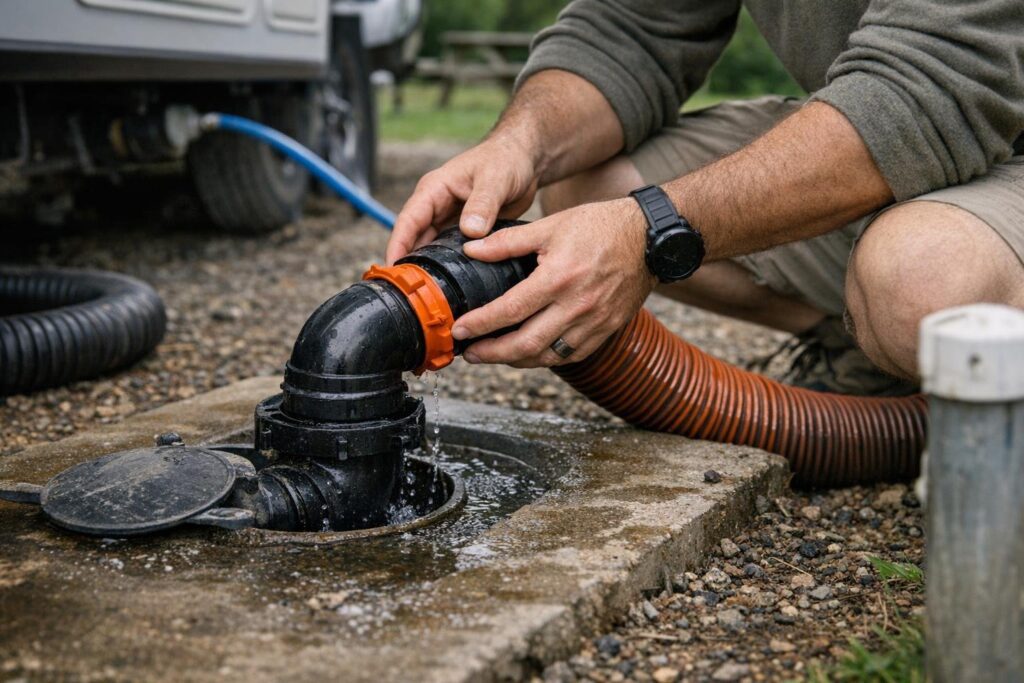
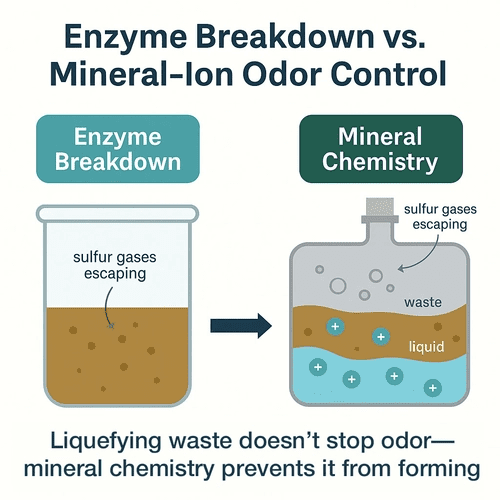
Happy Camper uses minerals, not enzymes, to control odours, and that really changes how it works compared to bacterial or chemical treatments. The mineral-based formula keeps working no matter the temperature and doesn’t need live bacteria to do its job.
Mineral-Based vs Enzyme Treatments
Happy Campers RV toilet treatment relies on minerals, not enzymes, for odour control. Enzyme treatments use live bacteria to digest waste, which sounds great but kind of falls flat in real camping situations.
Key differences:
- Temperature sensitivity: Enzyme treatments slow down or quit in cold weather because the bacteria just go dormant below 10°C. Mineral treatments? They keep working, hot or cold.
- Water requirements: Enzymes need just the right moisture to keep bacteria alive. Minerals dissolve fast and get to work as soon as they hit your tank.
- Storage stability: Enzyme products lose power over time as the bacteria die off in the bottle. Mineral formulas stay stable for years, no problem.
The mineral approach actually prevents the over-liquefaction headache that enzyme-based RV holding tank treatments can cause. When waste turns too liquid, it just slides away from solids, leaving behind those dreaded pyramids and clogs.
Performance Over Time
Happy Camper keeps odour under control the whole time you’re camping. Chemical deodorants like Thetford Aqua-Kem might mask smells at first, but they usually fade after a couple days—especially when it’s hot out.
Mineral treatments don’t kill off bacteria—they just neutralise the stinky compounds. Your tank builds up a healthy bacterial environment naturally, so you don’t have to keep reapplying stuff nonstop.
Most RVers notice enzyme treatments work alright for the first week, then drop off. The bacteria run out of food and die, so you’re basically just treating the symptoms, not actually maintaining your tank.
Happy Camper costs about $0.88 to $1.57 per treatment, while enzyme liquids run $0.50 to $1.12. The side-by-side comparison shows mineral options are just better value since they work in more situations.
Chemical Safety Considerations
Old-school chemical treatments use formaldehyde or harsh biocides that kill everything, including your tank’s rubber seals and valve gaskets. Plus, a lot of campgrounds won’t let you dump them if they run septic systems.
Happy Camper skips formaldehyde, bleach, and biocides. It’s safe for all your seals and won’t mess up septic systems or treatment plants. The mineral formula is non-toxic, so you don’t have to panic if you accidentally touch it.
Chemical deodorizers create another headache—they stop your black tank from building up the right bacteria for waste breakdown. You end up relying on harsh chemicals to cover up odours instead of actually preventing them.
The odourless holding tank treatment approach focuses on neutralizing the actual stink compounds instead of just covering them with perfume. Honestly, this works way better for longer trips, since chemical fragrances just mix with waste odours and make things worse.
Choosing the Right Size and Package For Your RV Needs
Happy Camper comes in several package sizes to fit how often you camp and how big your tanks are. The big 130-treatments container is the best deal for frequent RVers, while the smaller ones are good if you’re just testing it out or only camp occasionally.
130 Treatments Size Overview
The 130-treatments package is the biggest size Happy Camper sells to regular folks. You get enough powder to last a whole season or more if you’re on the road a lot.
If you treat your tank every three days, you’ll get about four months out of this one. It uses the same one-scoop-per-40-gallons formula as the smaller tubs, so a 40-gallon black tank gets one scoop, and an 80-gallon tank needs two scoops per use.
There’s a measuring scoop inside the container, so you’re not left guessing. This size means you won’t be running out or making extra trips to restock during long hauls.
Cost-Effectiveness for Full-Time RVers
If you RV full-time, you’ll save a lot by grabbing the 130-treatments size instead of buying smaller tubs all year. The cost per treatment drops way down when you buy in bulk.
You’ll spend less per use and still get reliable odour control in your tanks. The long shelf life means it’ll stay good even if you store it for months between trips.
Think about how often you dump your tanks—if it’s every three to five days, this package will last eight to twelve months. If you’re just a weekend camper, you could stretch it over two or three seasons.
The upfront cost pays off with consistent results and no risk of running out when you’re camped out in the middle of nowhere, far from any RV supply store.
Frequently Asked Questions
People have a lot of questions about Happy Camper tank treatment—stuff like how much to use, the best way to apply it, how long it actually takes to work, and where you can find it in Canada. If you get a handle on how to use it right (and what to expect), you’ll usually get way better results from this mineral-based holding tank treatment. Trust me, it makes a difference.
How do you use RV holding tank treatment correctly, step by step?
First, figure out the right dosage—one scoop for every 40 gallons of tank capacity. If you’re not sure about your RV’s tank size, check the owner’s manual (I’ve had to do that more than once myself).
Next, toss the powder into at least a gallon of water in a bucket or container. Stir it up really well—don’t rush this part or you’ll end up with clumps. You want it totally dissolved so it doesn’t stick to your tank or toilet bowl. I learned that the hard way the first time and had to scrub out a stubborn ring.
After you’ve got a smooth solution, pour it straight into the toilet for the black tank and flush. For the grey tank, just dump it down the shower or sink drain. I always follow up with a few extra gallons of fresh water to help it move around and coat the inside of the tank.
I usually add more treatment after every tank dump. But if I’m dry camping or using the RV a lot, I’ll treat the tanks every few days instead of waiting until the next dump. It’s a bit more work, but it pays off.
How does this type of tank treatment work to control odours and break down waste?
Happy Camper relies on mineral salts and micronutrients—not those harsh chemicals or enzymes you see in other products. The minerals create a tank environment where good bacteria can actually thrive and do their thing.
These bacteria eat up the waste and knock out the gases that make your RV stink. That’s why I think Happy Camper works so well for long-term waste management; it basically supports the natural breakdown process. Plus, it helps keep solids from building up on tank sensors, so you get more accurate readings. That’s a win in my book.
Since the formula is mineral-based, it’s safe for septic systems and won’t mess with the good bacteria in those tanks either. That means you can dump at campgrounds with septic systems without worrying.
How long does it typically take before you notice results after adding it?
Honestly, I usually notice less odor just a few hours after adding Happy Camper. It starts working right away once it’s mixed through the tank, which is pretty satisfying.
Breaking down all the waste takes longer, though. It depends on stuff like temperature and how full your tank is. If it’s hot out—say, over 30°C—the process speeds up, but you might want to bump up the dosage a bit. Cold weather slows everything down, which can be a pain.
If you’re dealing with a really stubborn tank that already has buildup, you’ll probably need to treat it several times over a few days to get rid of the smell. But if you stay on top of regular treatments, you’ll avoid these headaches in the first place.
Can this tank treatment be used safely in a grey water tank as well as a black water tank?
Absolutely—Happy Camper works just as well in grey tanks as it does in black tanks. The same mineral-based formula handles both types of wastewater, no special tweaks needed.
Grey tanks definitely benefit from regular treatment. Soap scum, food bits, grease—they all add up and can make your RV smell pretty funky. Treating your grey tank helps prevent that sour, rotten smell you sometimes get from old food waste and bacteria.
I stick to the same dosage ratio for both tanks, based on how big they are. Honestly, my grey tank fills up way faster than the black tank, especially on trips where I’m doing a lot of dishes or showering, so I end up treating it more often.
Where can you buy it in Canada, and is it available at local RV supply stores?
Most RV dealerships and outdoor stores across Canada carry Happy Camper, at least in my experience. You’ll usually find it in the maintenance or cleaning aisle at the bigger RV supply chains.
It’s also easy to grab online—Amazon.ca almost always has it in different sizes. Camping World locations in Canada stock it too, and sometimes you’ll see it at hardware stores if they have an RV section, but that really depends on the store.
Lots of smaller, independent RV supply shops carry it as well, and their staff usually know their stuff if you have questions about how to use it. I’d call ahead, though, especially if you’re making a special trip—sometimes they run out faster than you’d think.
What is the typical price range in Canada, and how long does a container usually last?
You’ll find a container with 18 treatments runs about $30 to $40 CAD, while the 64-treatment size goes for anywhere from $60 to $80 CAD, give or take, depending on where you shop. Prices swing a bit between online and in-person stores.
How long a container lasts? Well, that really depends on how often you use your RV and what kind of tanks you’re working with. If you’ve got a typical RV with 40-gallon tanks and just use it for weekend trips, the 18-treatment size could easily get you through an entire camping season. But if you’re living in your RV full-time and treating tanks every few days, you’ll burn through it a lot quicker.
Expect to pay around $1 to $2 CAD per treatment—pretty much on par with, or maybe just a tad higher than, some of the chemical alternatives out there. Still, a lot of RV owners seem to feel that the mineral-based formula’s effectiveness and septic-safe qualities make the price worth it.
If you’re out camping a lot, grabbing the bigger 64-treatment container gets you a better deal per use. Just stash it somewhere cool and dry, and keep that lid sealed up tight. It should stay effective for several years, honestly.