
Camping projects for kids turn outdoor trips into hands-on adventures. These camping crafts for kids keep children engaged, creative, and excited about nature.
When you add in a variety of camping activities for kids, everyone gets a role in the adventure. Whether you’re planning crafts for the campsite, need rainy day backup activities, or want to build excitement before you leave, camping-themed crafts help kids connect with the outdoors and develop fine motor skills and imagination.
These projects work for toddlers through tweens. You can use simple supplies you probably already have at home or can find right in nature.
You’ll find projects that range from quick 10-minute crafts to longer activities that double as learning experiences. Many camping projects use recycled materials like plastic bottles, cardboard tubes, and containers, so they’re budget-friendly.
The best part? Kids actually use what they make during your trip—glowing lanterns, decorated hiking sticks, or a camping journal for their adventures.
Our kids LOVE to paint pictures on rocks and hide them around the camp site for others to find. This keeps them busy, allows them to use their imaginations, and secretly gives mom and dad some good down time to relax!
This guide includes nature crafts with materials found at the campsite, classic campfire-themed projects, rainy day activities, and keepsake crafts. Kids will treasure these long after the trip ends.
You’ll get step-by-step ideas, plus age recommendations and supply lists that keep it all simple.
Key Takeaways
- Camping projects keep kids entertained while teaching outdoor skills and building excitement before and during trips.
- Many crafts use free natural materials or recycled supplies, so they’re easy and affordable for any family.
- Projects range from simple toddler activities to creative keepsakes for rainy days or group campfire fun.
This Post Is All About Camping Projects For Kids
Getting Started: Preparing for Camping Projects
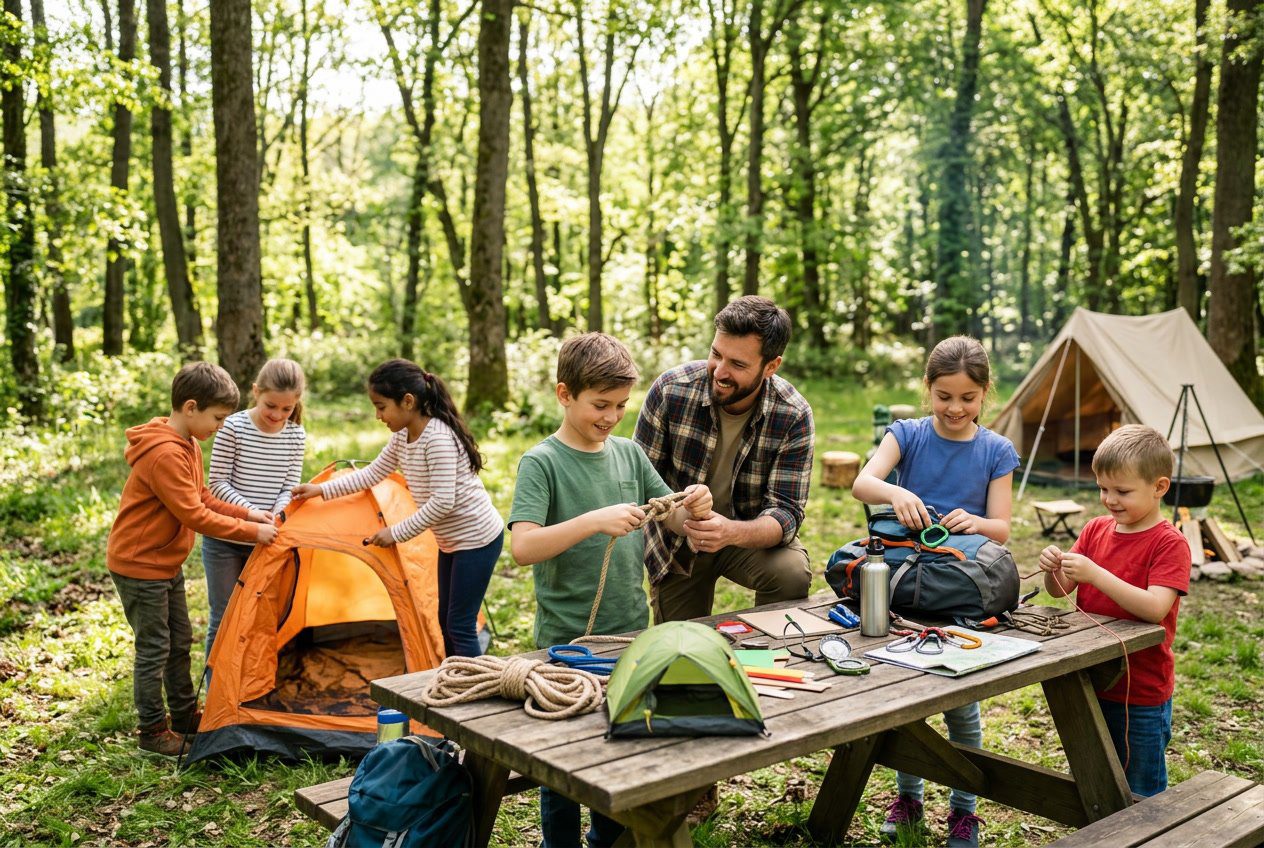
Pack the right supplies, follow basic safety rules, and match projects to your child’s abilities. These three steps make fun camping crafts successful.
Choose the best camping crafts based on your environment and the materials you have. Having a few ideas ready before you leave helps keep things organized, too.
Essential Supplies and Tools for Kids Camping Crafts
You really need less than you think for crafts for camping. Washable markers work much better than crayons since crayons melt in hot cars.
Bring 10 to 15 sheets of cardstock instead of regular paper—it just holds up better outside. Pack white glue or glue sticks in a sealed plastic bag so nothing leaks.
Both masking tape and clear tape come in handy for different projects. A small ball of string or yarn is enough for a weekend trip, honestly.
Some supplies that have saved our kids during rainy days were glue sticks, cotton balls, and toilet paper rolls. These are easy to pack and allow for a lot of creativity. One thing we always forget that is now on our list…Tape.
Basic Craft Kit for Camping:
- Washable markers (in waterproof bag)
- Cardstock (10-15 sheets, various colours)
- Glue sticks or white glue
- Safety scissors in hard case
- Masking tape and clear tape
- String or yarn
- Small washable paint set
- 10-12 ziplock bags (various sizes)
- Wet wipes for cleanup
Store everything in a plastic container with a tight lid. That way, supplies stay dry and easy to find at camp.
Safety Tips for Creative Outdoor Activities
Supervise kids more closely outdoors than you would at home. The camping environment throws in more variables you can’t always control.
Check all found materials before kids touch them. Watch out for bugs, sharp edges, or poison ivy.
Never let children use materials from plants you can’t identify. Keep craft areas away from the fire pit and cooking zone.
Set up a dedicated craft space at your picnic table or on a blanket in the shade. Teach kids to wash hands after handling natural materials—some tree sap can really irritate skin.
Always have wet wipes or water nearby for quick cleanup. Pack sharp tools like scissors in hard cases and only give safety scissors to kids who can handle them.
Keep craft knives and hot glue guns out of reach when camping with younger children.
We once asked our youngest to go find a stick that he could use for marshmallows and hotdogs. It was nearing the end of the day and daylight set below the mountains which made it very hard for him to see. He had grabbed a stick with thorns and that ruined his whole night.
Choosing Age-Appropriate Projects
Toddlers aged two to four need simple activities with no small pieces. Give them a bucket to collect leaves and rocks.
Let them arrange sticks on the ground without glue. Large rock painting with fat brushes works well because you can use washable paint.
Kids aged five to eight can follow simple steps and want their projects to look “real.” Easy camping crafts like leaf rubbings and pinecone bird feeders give them quick success.
They can handle safety scissors and basic paper folding. Children aged nine to twelve need challenges that take more time and skill.
They can solve problems like building twig boats that actually float. Detailed painting and weaving projects keep them interested longer.
Match project length to your child’s age. Toddlers lose interest after 15 minutes, but school-age kids can work for 30 to 45 minutes on something they enjoy.
Nature Crafts and Outdoor Art Projects
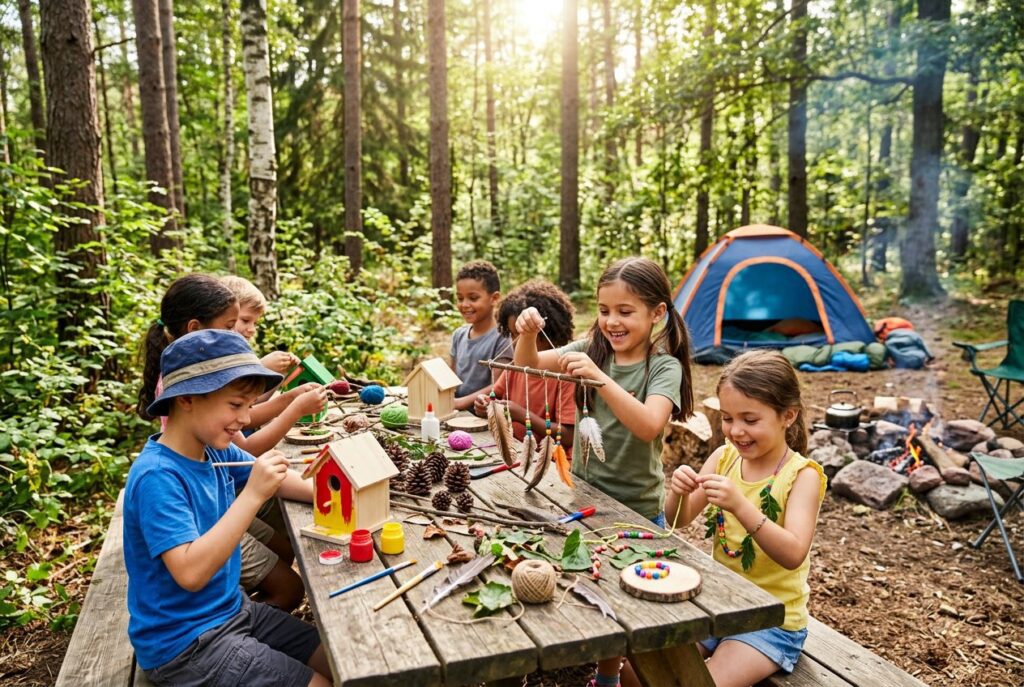
Kids connect with the outdoors through hands-on projects that turn natural materials into art. Rocks become painted characters, leaves turn into textured prints, and simple games help children spot wildlife and plants around camp.
Rock Painting and Story Stones
Rock painting needs minimal supplies and keeps kids busy for hours. You just need smooth rocks, a flat surface, and either washable paint or paint pens for finer details.
These tools are perfect for creating camping story stones that show off different parts of your trip. Start by collecting rocks during a morning hike.
Look for flat, smooth stones about palm-sized. Let your kids wash them with water and dry them in the sun for 20 minutes.
Basic rock painting ideas include:
- Animals like bears, owls, or fish
- Camping scenes with tents and trees
- Simple patterns and colours
- Positive words or family names
Story stones add an extra layer of fun to painted rocks. Paint different images on 8-10 rocks—maybe a tent, tree, animal, person, and campfire.
Kids pull stones from a bag and make up stories based on what they pick. This works great during quiet time or before bed.
Seal finished rocks with clear craft sealer if you want to keep them. Or leave painted rocks at campsites as surprises for other families to find.
Leaf Rubbing and Nature Art
Leaf rubbing creates instant art that shows off the unique patterns of different trees. Place a leaf vein-side-up under white paper and rub the side of a crayon across it.
The texture appears like magic. Try different trees to compare patterns—oak leaves make bold, jagged prints, while maple leaves create star-shaped designs.
Pine needles give you delicate lines. Nature art projects using found materials:
- Press flowers and leaves between book pages
- Create nature mandalas with circular patterns of petals, stones, and sticks
- Glue leaves onto cardstock for animal collages
- Make bark rubbings from different tree trunks
Nature journals combine several art techniques in one place. Fold paper into a booklet and let your kids draw what they see each day.
Add leaf rubbings, pressed flowers, or sketches of wildlife. Write the date and location beside each entry.
These projects teach kids to notice details they might otherwise miss. Even a simple leaf gets interesting when you really look at its veins and edges.
Nature Scavenger Hunt and Camping Bingo
A camping scavenger hunt turns the entire campground into an exploration game. Create a list of items for kids to find, like a pinecone, smooth rock, or animal track.
Scavenger hunt variations:
- Colour hunt (find something red, blue, green, etc.)
- Texture hunt (rough bark, soft moss, smooth stone)
- Alphabet hunt (items starting with each letter)
- Photo scavenger hunt (take pictures instead of collecting items)
Camping bingo works a bit differently but keeps kids just as engaged. Make bingo cards with camping-themed squares like “see a blue jay,” “find a pinecone,” “spot a chipmunk,” or “hear a woodpecker.”
The first person to get five in a row wins. Print bingo cards before you leave home or draw simple grids on paper at camp.
Use small rocks or leaves as markers to cover squares. Both games teach observation skills and keep kids moving.
They work during hikes, around the campsite, or even on walks to the bathroom.
Set clear boundaries for where kids can search. They should stay within sight and never wander into unfamiliar areas alone.
Arguably one of the best activities! Our kids absolutely cant wait for for this when we camp. Its a staple in our family camping trips now.
Classic Campfire-Themed Crafts
Campfire crafts use kids’ hands and feet to create keepsake art. You can transform simple paper plates into glowing fires or turn the favourite camping treat into creative projects.
These activities work well for rainy camping days or when you want to build excitement before your trip at home.
Handprint and Footprint Campfire Crafts
A handprint campfire craft is such a fun way to capture your child’s hand size and make flame-coloured art at the same time. Just paint each hand in red, orange, and yellow, then press them onto white cardstock—fingers up—to look like flames.
We usually add brown painted logs or cut paper logs at the bottom. That little detail really makes it pop, even if it gets a bit messy.
The campfire handprint craft turns into a keepsake you can date and frame. I recommend washable paint for toddlers (trust me, it saves your sanity), but older kids who want bold colours might prefer acrylic.
For tiny campers, you could try a happy camper footprint tent craft instead. You paint your child’s foot, press it on paper to make a tent shape, and add a little door flap—it ends up being a sweet way to remember just how little they were on this trip.
Paper Plate and Construction Paper Campfires
A paper plate campfire doesn’t need much—most of us have the supplies at home already. Cut flame shapes from red, orange, and yellow construction paper, then glue them sticking up from the centre of a paper plate.
We usually add brown construction paper logs or painted popsicle sticks around the base. It takes just a few minutes and looks pretty cute on a table.
For a paper campfire craft that actually glows, cut tissue paper flames and stick them to a clear plastic cup. Drop in a battery-operated tea light—kids love that cozy glow at bedtime.
Construction paper campfires double as campfire crowns. Print a crown template, colour the flames, and fit it to your child’s head. It’s a fun party activity or a silly reward for completing camping chores.
S’mores and Campfire Treat Projects
S’mores crafts are just classic—who doesn’t love the campfire treat? Try making a s’mores craft necklace with air-dry clay.
Kids shape the pieces, let them dry, and then paint them. It’s surprisingly fun, and you might end up with a necklace or two that actually gets worn (or, let’s be honest, accidentally eaten if you use edible supplies).
Campfire storytelling always feels like the best way to end a night. Sharing classic stories around the flames builds those memories that stick for years.
For a snack with a lesson, try edible campfire safety crafts. Kids build with pretzel sticks for logs, red and orange fruit strips for flames, and marshmallows for smoke—they learn fire rules while making something tasty to eat.
Simple S’mores Projects:
- S’more BINGO cards with emoji faces—these are a hit at camping parties, even if the rules get a little loose.
- Roll a S’more dice game—kids collect six pieces to build a full s’more, but someone always sneaks an extra marshmallow.
- Peep marshmallow shelters—sticks and leaves from around the campsite make it feel like a real camp project.
Creative Camping Decor and Useful Projects
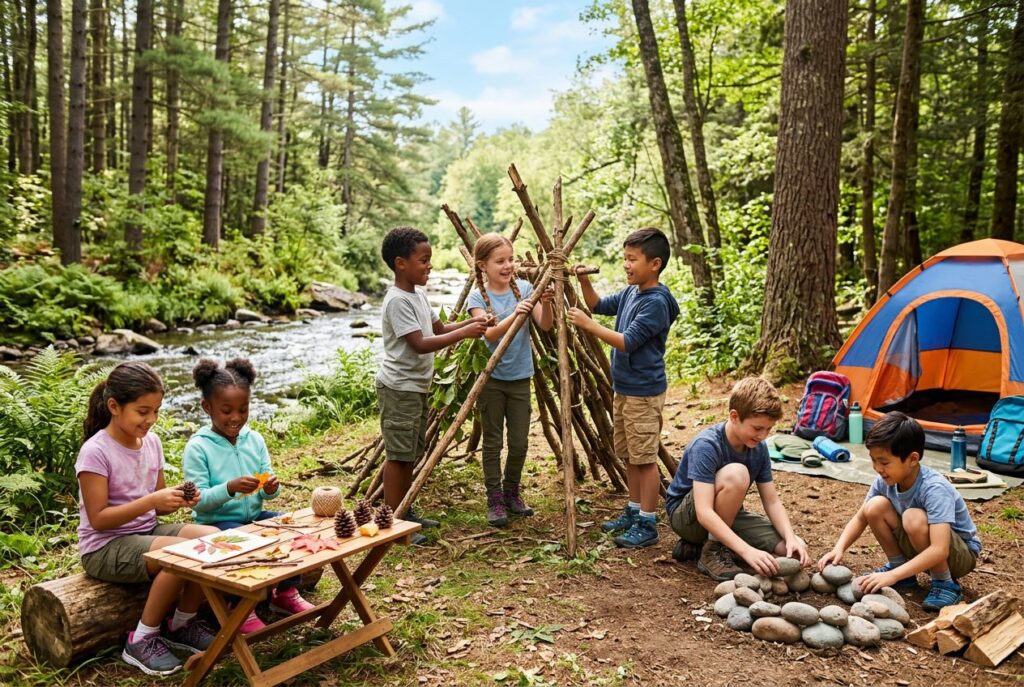
Kids love turning recycled stuff into glowing lanterns that light up the campsite. They can build little tents from popsicle sticks, or even make feeders to attract real birds nearby.
DIY Lanterns and Glowing Camp Lights
Empty water bottles and plastic containers quickly become lanterns with a little creativity. We paint or glue orange, red, and yellow tissue paper on the outside to make flame colours.
Cut out a cardstock handle and tape it to the top. It’s not fancy, but the kids love carrying them around.
Drop in a battery-powered tea light or glow stick and you’ve got a portable lantern that actually glows at night. My kids parade them around the campsite once the sun goes down.
For a lantern that stays put, we use clear deli containers wrapped in coloured tissue paper. The plastic softens the light when you drop in a small LED.
Hang them from tent poles or picnic tables—they look surprisingly magical. It’s a small touch, but it makes the campsite feel special.
Camping Tent and Shelter Crafts
Popsicle sticks and fabric scraps are all you need to let kids build their own miniature camping tent craft displays. Glue four sticks in an A-frame, drape felt or fabric on top, and secure with a dab of glue.
Let kids add details—paper sleeping bags, pipe cleaner campfire rings, painted pebbles for a fire pit. These tent crafts work well as dioramas for storytelling, and they’re surprisingly sturdy.
Footprint tents also make sweet keepsakes. Paint your child’s foot, press it onto cardstock in a triangle tent shape, and add a door flap and little camping scene around it.
Bird Feeders and Nature Helpers
Pinecone bird feeders are about as simple as it gets—grab a pinecone, roll it in peanut butter, then coat it in birdseed. Tie a string on top and hang it from a branch near your campsite.
Popsicle stick bird feeders take a bit more effort but they last longer. Glue sticks together to make a platform with raised edges for the seeds, and add a roof if you want to keep the rain out.
Hang feeders at least 1.5 metres up so squirrels don’t raid them immediately. Double-check campground rules first—some places don’t allow feeding wildlife, and you don’t want a ranger scolding you.
Camping Crafts for Rainy Day Fun
When rain keeps everyone inside the tent or RV, simple crafts save the day. I always prep a list of rainy day camping activities—it’s a must, honestly.
These projects use minimal supplies and work even in cramped, dry corners. You don’t need much to keep everyone busy.
Binoculars and Exploration Tools
Toilet paper roll binoculars are the perfect rainy day craft—and kids actually use them once the rain stops. Tape two empty toilet paper rolls together, punch holes on the sides, and thread string for a neck strap.
Let kids decorate with markers, stickers, or paint before heading out to spot wildlife. It takes maybe 15 minutes.
This DIY cardboard binoculars craft only needs stuff you probably already packed. Once finished, suddenly everyone becomes an explorer scanning for birds, squirrels, or whatever moves.
If you want to go further, make a compass from a paper plate—just draw the directions on. Or, create a nature viewer by stretching clear plastic wrap across a cardboard frame.
Camping Memory Journals and Keepsakes
A nature journal is a great way for kids to document their trip while waiting out the rain. Staple blank paper together for a booklet, then let them draw, write, or press leaves and flowers they found before the weather turned.
Older kids might write what they’ve seen and done, while younger ones just doodle their favourite moments or trace their hands (which often turn into forest animals). Date the pages so the journal turns into a real keepsake.
These camping-themed journals keep kids busy with purpose during downtime. I always toss a waterproof bag with extra paper, glue sticks, and coloured pencils into our gear, just for rainy days.
Paper and Popsicle Stick Activities
Popsicle stick tent models are a classic rainy day camping craft. Arrange sticks into triangles for tents, then add fabric or paper covers.
Kids love building little campgrounds—mini tents, pebble fire rings, stick trees. It gets a bit chaotic, but in a good way.
Paper plate campfire scenes brighten gloomy afternoons. Paint a white plate with red, orange, and yellow flames, then glue on brown strips or real twigs for logs. Add a puff of cotton ball smoke if you want extra flair.
Foldable paper tents teach basic origami and keep the theme going. Fold paper into triangles, let kids decorate, and you’re set. These projects store flat and don’t make a mess, which is a lifesaver in a tiny tent.
Group Activities and Games for Kids
Group games turn a bunch of individual campers into a real team. Planning specific camping games for kids keeps everyone moving and laughing—even the adults end up joining in sometimes.
These activities work best when they’re simple, active, and don’t need much explanation. No one wants to read a rulebook at the campsite.
Camping Games and Obstacle Courses
Camping charades and Pictionary give classic games a fun twist. Kids act out camping words like “pitching a tent” or “roasting marshmallows,” and their teammates try to guess.
Set up an obstacle course with whatever you have—picnic tables to crawl under, rocks to hop between, logs to balance on, trees to weave through. Time each kid and keep score on a scrap of cardboard.
Glow stick ring toss turns into a highlight after dark. Put glow sticks inside water bottles for targets, then make rings from glow bracelets linked together.
Simple Relay Race Ideas:
- Fill and carry water buckets—try not to spill (but someone always does).
- Balance pinecones on paper plates while walking—hilarious chaos guaranteed.
- Three-legged races between tent sites—expect giggles and tangled legs.
- Collect specific nature items in paper bags—kids turn into treasure hunters.
Team-Based Craft Challenges
Split the kids into small teams for nature scavenger hunts. Each group gets a paper bag and a checklist—hunt for different colored leaves, smooth stones, or funky bark pieces.
Let the teams race to build the tallest structure using only sticks, leaves, and mud. Set a 20-minute timer, lay down a couple of basic rules about what counts as “standing,” and watch the chaos (and creativity) unfold.
I’ve found this activity works especially well for summer camp, particularly when you’ve got a big crowd. The kids get competitive but in a good way—sometimes they surprise you with what they dream up.
Nature collage competitions are another favorite. Teams create pictures or patterns using stuff they find on the ground.
Draw a simple outline on cardboard—a sun, a tree, or maybe an animal. Have teams fill it in with petals, seeds, pebbles, and grass.
Craft Challenge Variations:
- Best camping-themed fairy house
- Most creative nature paintbrush (with leaves and twigs)
- Tallest rock cairn that actually stays up
Capture the Flag and Classic Outdoor Games
Capture the flag is still one of the most popular summer activities at campsites. Mark off boundaries with rope or natural landmarks, and use bright bandanas for flags.
Each team guards their flag while trying to snag the other team’s and get it back to home base. The game gets wild fast, but that’s part of the fun.
If you’ve got younger kids, tweak the rules—maybe add safe zones where nobody can get tagged. For mixed ages, let the little ones be “spies” who can sneak into enemy territory without getting caught.
Kick the can is a classic, especially after dark. Give everyone flashlights, pick someone to guard the can, and let the rest hide and try to kick the can before getting tagged.
Other Classic Games to Try:
- Red Rover (pick a soft, grassy spot!)
- Duck Duck Goose around the campfire circle
- Sardines (reverse hide-and-seek in the woods)
- Mother May I, but with camping-themed moves
Set up frisbee tic-tac-toe by scratching a grid in the dirt and using colored frisbees as pieces. Teams take turns tossing frisbees, hoping they’ll land where they want.
Friendship and Keepsake Camping Projects
Camping trips make special memories that kids want to hang onto. These summer crafts for kids, like friendship bracelets, become little souvenirs of their outdoor adventures.
You can do these projects right at the campsite or even before you go. I love having a few prepped—keeps the “I’m bored” complaints to a minimum.
Friendship Bracelets and Nature Bracelets
Friendship bracelets are a camp classic. Kids can make and swap them with their camping buddies.
All you need: embroidery floss in a bunch of colors, scissors, and tape or safety pins to anchor the bracelet while they work. The easiest pattern just uses three strands braided together.
If you’ve got older or more patient kids, try chevron or diagonal stripes. Set up a bracelet-making station at the picnic table with everything ready to go.
Our middle child just loves making bracelets and necklaces for everyone. It like camping Mardi Gras when she gets the string and beads out!
Nature bracelets mix things up. Wrap masking tape or duct tape (sticky side out) around your child’s wrist.
As you explore, let kids stick on flower petals, leaves, seeds, or tiny pine needles. It’s a wearable scrapbook of your adventure.
Snap a picture of the finished bracelet before it dries out and loses its color. I always forget and regret it later!
Printable and Take-Home Crafts
Printable crafts are a lifesaver when you need a quiet activity. Camping-themed word searches and I Spy games are perfect for downtime or rainy days.
Print these before your trip and stash them in a folder or zip-lock bag. Toss in colored pencils, crayons, and markers so you’re not scrambling for supplies.
Camping coloring pages with tents, campfires, and wildlife let younger kids make art they’ll want to show off at home. Some families even turn them into a camping journal—kids draw or write about their day.
A summer bucket list craft helps kids keep track of camping goals. They check off things like “roasted marshmallows” or “saw a deer” as they go.
Frequently Asked Questions
Kids always have questions about camping crafts, and parents want to know which projects fit different ages and situations. The right activity can teach outdoor skills and keep kids busy, whether you’re at home or under the trees.
What are some fun and easy outdoor-themed crafts children can make?
Kids can whip up nature crowns with leaves and flowers by sticking foraged bits onto a paper headband. This one’s quick—usually done in under 20 minutes—and even four-year-olds can handle it.
Rock painting is a hit too. Let kids decorate smooth stones with camping scenes—tents, animals, whatever they dream up.
Use washable paint for little ones and acrylics for older kids who want their art to last. Pinecone bird feeders are fun and a little messy.
Kids tie string around a pinecone, slather it in peanut butter, and roll it in birdseed. Hang it from a tree and wait for the birds to show up.
Stick picture frames are super simple. Kids glue four sticks into a square, then decorate with acorns, moss, or tiny flowers they find nearby.
Which simple DIY activities help children practise basic camping skills at home?
Popsicle stick tent models are great for learning about structure and stability. Kids glue sticks into triangles, then add fabric scraps for a tent cover.
DIY cardboard binoculars are another favorite. Tape two toilet paper rolls together, punch holes for string, and you’ve got a homemade neck strap.
A camping memory journal lets kids draw or write about their adventures. Staple blank pages together so they can keep track of what they see and do.
Paper plate campfire scenes are both crafty and educational. Kids paint the center orange and red, glue brown paper logs around the edge, and talk about fire safety while they work.
Cardboard trail signs help kids learn about navigation. They create directional signs for the backyard or practice reading trail markers before the trip.
Where can parents find free printable templates for outdoor-themed crafts?
Tons of educational sites offer free printable camping activity sheets—coloring pages, bingo cards, scavenger hunt lists. Just search “camping printables for kids” and you’ll find plenty.
Teachers Pay Teachers is another good spot, with both free and paid templates. Filter by price to find free tent templates, animal track cards, and nature journal pages.
Pinterest boards collect printable camping crafts from all over. Try searching “camping bingo printable” or “nature scavenger hunt PDF” for ready-to-go options.
Public library websites sometimes have downloadable activity sheets too. Check your library’s children’s section or just ask a librarian what they recommend.
What are good take-home craft ideas for a school or day-camp activity?
Nature bracelets are perfect for take-home crafts—quick, memorable, and easy. Wrap tape around each child’s wrist (sticky side out) and let them press on flowers, leaves, or grass while outside.
Paper bag lanterns are always a hit. Kids cut designs into lunch bags and pop in battery tea lights—great for home or future camping trips.
Story stones make storytelling portable. Paint rocks with tents, trees, animals, and campfires, then let kids use them to invent adventure stories.
Felt s’mores crafts give kids a keepsake without any sticky mess. Cut brown, white, and tan felt into squares and stack them up like real s’mores for pretend play.
Leaf bookmark keepsakes are sweet and simple. Kids sandwich a leaf between clear tape, trim the edges, and end up with a bookmark that brings back memories of the outdoors.
What are engaging craft ideas suitable for older children and tweens?
Nature weaving with grass and reeds challenges tweens to make woven mats from scratch. It takes patience and helps build fine motor skills—honestly, it’s kind of meditative.
Detailed rock painting is great for artistic tweens. They can paint animal portraits, landscapes, or cool geometric designs on river stones.
Driftwood mobiles are a test of design skills. Kids tie string to a main branch and dangle smaller sticks, shells, or leaves at different heights to make hanging art that actually balances.
Camping journals with written entries are perfect for older kids who like to document everything. They jot down notes about wildlife, weather, or the little challenges they face and overcome.
Star constellation cards bring in a bit of astronomy. Tweens poke holes in black paper to match real constellations, then shine a flashlight through to project “stars” onto the tent wall.
What is the 200 rule, and how does it apply to planning a family outing?
The 200 rule gives families a simple way to plan travel distances when camping with kids. Basically, it means you shouldn’t drive more than 200 kilometres or spend over two hours on the road in a single day.
This little guideline helps everyone avoid cranky, overtired children. It also leaves space for pit stops, meals, and those inevitable, unpredictable delays.
Honestly, young kids just don’t do well with marathon drives. If you keep travel days short, the whole trip feels way more enjoyable.
Try sticking to the 200 rule by picking campgrounds within about a two-hour radius from home, especially for those first trips. Over time, you’ll figure out if your kids can handle longer stretches or if they need even less time in the car.
The rule nudges you to plan more nights at fewer spots instead of packing up camp every single day. Staying put lets kids actually explore, mess around with crafts made from sticks and rocks, and get comfy with the whole camping routine.
Some families tweak the rule depending on their kids’ ages and personalities. Maybe toddlers max out at 100 kilometres, while older kids—if they’re entertained and you plan well—can sometimes handle 300 kilometres without too much complaining.