
Boondocking in the Canadian Rockies sounds dreamy until you’re actually out there, the sun drops behind the peaks, your phone loses signal, and you suddenly remember you forgot to top up your water tank or something of that nature.
The good news is boondocking is totally doable in the Rockies if you plan like a grown-up and camp like a respectful human. This guide covers what boondocking really means here, where it’s allowed (and where it definitely isn’t), how to stay safe, and how to leave the place better than you found it.
If you’re road-tripping through Alberta and BC and want more Rockies-specific RV tips, Along The Rockies has practical guides and checklists built for exactly this kind of trip.
This Post Is All About Boondocking In The Canadian Rockies
Disclosure: Some of the links in this post are ‘affiliate links’. This means if you click on the link and purchase the item, I will receive an affiliate commission.
What “boondocking” means in the Canadian Rockies
In RV world, boondocking usually means camping without hookups. In the Rockies, it can look like a few different things:
- Random camping (crown land camping): Free camping on public land where it’s allowed, following local rules.
- Designated recreation sites: Often free or low-cost sites on public land with basic amenities like pit toilets or fire rings, but no hookups.
- Overflow or staging areas (rare): Sometimes near busy destinations, but rules vary and it’s not always legal to overnight.
- Not this: Pulling into a national park parking lot, a trailhead lot with “no overnight” signs, or a scenic pullout on the highway shoulder.
The Rockies are heavily managed, and the most iconic areas are national parks. That matters because national parks have stricter rules and fewer “free” options. However, with some research into exploring the Rockies, you can find suitable spots that align with your boondocking plans.
The #1 Rule: Know The Land Type Before You camp
Before you even think about parking for the night, figure out what kind of land you’re on. Your options and rules change completely depending on the boundary line.
National Parks (Banff, Jasper, Yoho, Kootenay, Waterton)
Boondocking is not permitted in national parks. You must stay in:
- A frontcountry campground
- A backcountry campsite (hike-in, not RV)
- A private campground outside the park
You also can’t just “stealth camp” in parking lots. Enforcement is real, especially in peak season.
Provincial Parks (Kananaskis)
Most provincial parks also require you to camp in designated campgrounds. Some have random camping zones nearby, but the park itself usually isn’t it.
Crown Land in British Columbia or Public Land Use Zones (PLUZ) in Alberta
This is where most Rockies boondocking happens. But “crown land” doesn’t automatically mean “camp anywhere.” Some areas require permits, have time limits, ban fires, restrict vehicle access, or are closed due to wildlife and watershed protection. It’s important to understand the specific Crown land uses that apply to your chosen area.
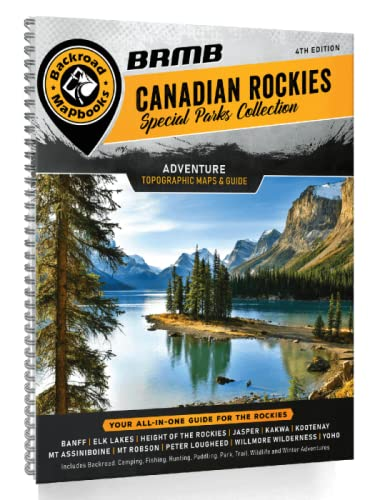
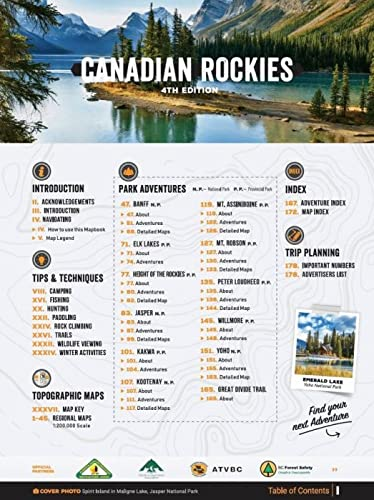
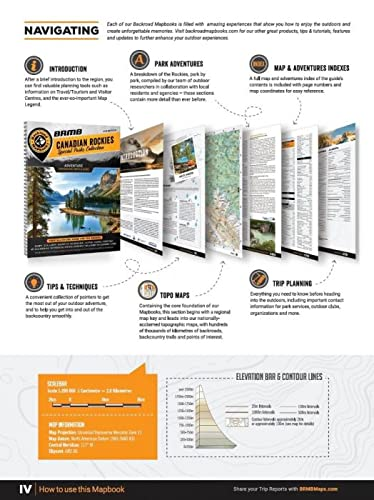
I rely heavily on Backroad MapBooks – Canadian Rockies for knowing what I can and cannot do in the Canadian Rockies.
First Nations Land
Rules vary and permission is required. Don’t assume.
Municipal Land and Highway Pullouts
Many towns near the parks have bylaws against overnight parking and camping. Highway pullouts are often prohibited for overnight stays and can be unsafe.
Where People Boondock Near The Canadian Rockies (The Realistic Version)
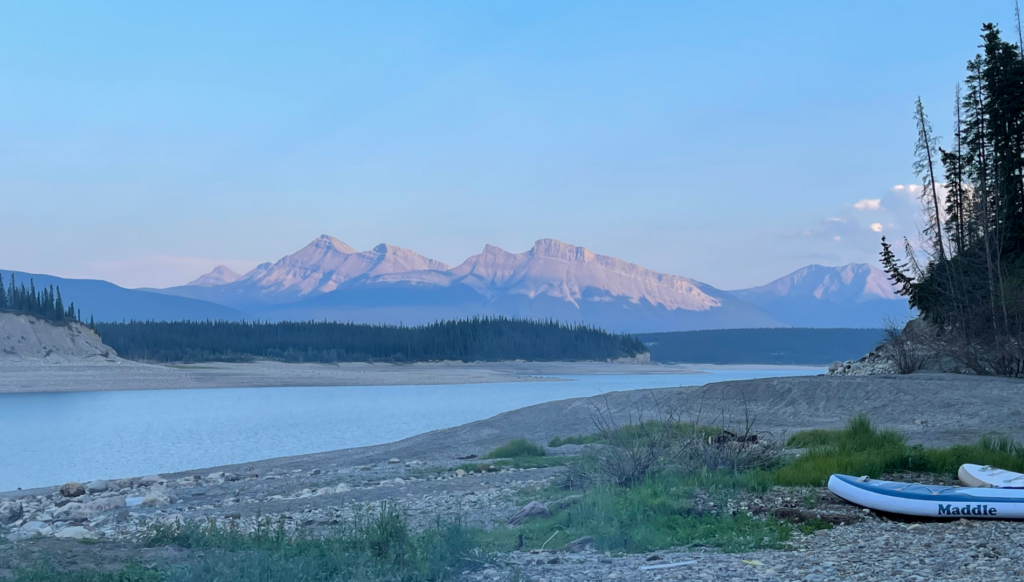
If you’re picturing waking up lakeside in Banff for free, I’m going to gently bring you back to earth.
Most practical boondocking happens outside the national parks, typically:
- On BC recreation sites and forest service roads
- In designated public land use zones (PLUZ) or similar managed areas
Because conditions and rules change fast, I’m not going to toss out a random list of coordinates. Instead, use this decision process:
- Pick a base region (for example, outside Banff toward the foothills, or in the Columbia Valley on the BC side).
- Confirm the land manager (province, park, municipality, First Nations, private).
- Check current restrictions (fire bans, road closures, seasonal closures, wildlife advisories).
- Confirm access (road conditions and your rig’s clearance).
- Have a Plan B (because your first spot might be taken, muddy, or posted as no camping).
If you want Rockies-focused trip planning, Along The Rockies often builds itineraries around what’s actually feasible with an RV, including when it’s smarter to book a campground and when boondocking makes sense.
Permits & Rules You Need To Know (Especially In Alberta)
Rules vary by province and land type, but Alberta is where many first-timers get tripped up.
Alberta: random camping often requires a permit
In many parts of Alberta’s public lands, random camping is regulated and may require a permit (commonly known as a public lands camping pass). There are also rules around:
- How long you can stay (often a limit like 14 days)
- How far from water you must camp (many “lakes” are actually reservoirs)
- Where off-highway vehicles can go
- Firewood use and fire bans
Always verify current requirements for the specific zone you’re targeting. Don’t rely on a Facebook comment from 2021.
BC: recreation sites and forest roads are common, but not “anything goes”
BC has loads of recreation sites, and many allow camping with basic facilities. But they can fill up quickly, and forest service roads can be rough, narrow, and not trailer-friendly.
Safety In The Rockies: The Stuff People Don’t Like To Talk About
Boondocking here is amazing, but you’re in real mountain country. Treat it that way.
Wildlife is not a cute side quest
You’re in bear country. Often also cougar, wolf, and moose country (and moose can be terrifying).
Do this:
- Store food properly (inside the RV, not outside on the table)
- Keep your site clean, especially at night
- Never leave garbage out
- Don’t cook bacon and then toss grease in the bushes
- Always carry bear spray and know how to use it
If you’re tenting while traveling with an RV, be extra cautious with food storage and sleeping areas.
Weather changes fast
A sunny afternoon can turn into hail, heavy rain, or near-freezing nights, even in shoulder season.
Plan for:
- Cold nights (extra propane, good sleeping setup)
- Wind (secure awnings and gear)
- Rain and mud (recovery boards can be a lifesaver)
- Snow in spring and fall (yes, it happens)
Cell service is unreliable
Assume you will lose signal.
Smart moves:
- Use Backroad MapBooks
- Invest in Starlink Satellite
- Let someone know your rough plan
- Carry a basic first aid kit
- Have a way to charge devices (solar, generator, or extra battery capacity)
Roads can wreck your day
Forest roads can be washboarded, potholed, muddy, or blocked by downed trees.
Before committing:
- Check recent road reports if possible
- Walk questionable sections
- Don’t tow into a spot you can’t turn around in
- If possible, scope the site a few weeks in advance without your camper
A general rule: if you’re white-knuckling the road in daylight, you’re going to hate it at night.
Water, Power, & Waste: Boondocking Logistics That Actually Matter
Boondocking is mostly a resource management game. Here’s how to not run out of the essentials.
Water
Conserve right away. Don’t wait until you’re half empty.
Easy conservation wins:
- Navy showers (quick rinse, water off, soap, water on)
- Use a dishpan and minimal rinse water
- Wipe dishes before washing
- Bring extra jugs for backup
Also, don’t assume you can refill from a random stream. In many areas, that’s unsafe without proper filtration and treatment, and access might not even be legal.
Power
Your setup determines how comfortable boondocking will feel.
Common options:
- Solar + batteries: Quiet and easy once installed, but weather dependent.
- Generator: Reliable, but noisy and often restricted by quiet hours or rules.
- Alternator charging: Helpful while driving, not a full solution for long stays.
Track your biggest power drains:
- Furnace fan (big one in cold weather)
- Fridge (if not propane)
- Lights and device charging
- Water pump
Propane
If nights are cold, propane disappears faster than you’d think. Bring more than you think you need, especially in spring and fall.
Waste (black tank, grey tank, trash)
This is where responsible boondockers are made.
- Don’t dump grey water on the ground unless it’s explicitly permitted (and in many places, it isn’t).
- Pack out all trash.
- Know where your next dump station is before you need it.
If you want to make this easy, grab the Ultimate RVing Checklist below. It helps you build a repeatable routine so you’re not scrambling every time you leave pavement.
Choosing A Good Boondocking Spot (a Simple Checklist)
A “good” spot isn’t just pretty. It’s legal, safe, and low-impact.
Look for:
- Existing disturbed sites (not fresh meadow or fragile ground)
- Level-ish parking with room to turn around
- Distance from water (to protect shorelines and reduce wildlife conflicts)
- No obvious wildlife attractants nearby (like overflowing trash)
- No new fire scars or illegal rings everywhere
Avoid:
- Soft ground after rain (you will sink)
- Narrow dead-end roads with no turnaround
- Camping directly beside a riverbank or lake edge
- Areas with lots of fresh bear scat or carcass remains nearby
Fire Rules & Campfire Reality
Fires are a big part of the camping vibe, but in the Rockies they can also be a problem.
Before lighting anything:
- Check for fire bans (they’re common in summer)
- Use existing fire rings if allowed
- Keep it small
- Never leave it unattended
- Drown it completely, stir, then drown again
If you’re not 100 percent sure you can put it out, don’t light it.
Also, consider skipping the fire entirely and using a propane fire pit if permitted. It’s cleaner, easier, and often allowed when wood fires aren’t (but still check local rules).
Leave No Trace, But Make It RV-Friendly
“Leave No Trace” can sound like something for backpackers, but it matters even more when you’re rolling in with a big rig.
Boondocking basics:
- Camp on durable surfaces and existing sites
- Pack out everything (including micro-trash like bottle caps and twist ties)
- Don’t dump tanks
- Don’t wash dishes directly in streams or lakes
- Keep noise down (sound travels)
- Respect closures and signage even if the spot “looks fine”
If everyone “just does it once,” the area gets shut down. That’s how boondocking access disappears.
When You Should Not Boondock
Sometimes the best boondocking decision is not boondocking.
Skip it if:
- You’re arriving late and don’t know the area
- Weather is turning nasty
- You’re low on fuel, water, or propane
- You’re traveling solo and feel uneasy
- The roads are beyond your comfort level
- You’re near a high-conflict wildlife area (or there are active warnings)
It’s okay to book a campground for a night, reset, dump, fill, charge, then head back out.
A Simple First-Timer Boondocking Plan (That Works)
If this is your first time boondocking in the Canadian Rockies, here’s a low-stress approach:
- Start with one night near a town where you can easily refill and dump the next day.
- Arrive in daylight and give yourself time to evaluate the spot.
- Track your usage (water, battery, propane) so you learn your rig’s real limits.
- Have a backup campground bookmarked in case it’s a no-go.
- Keep it clean and quiet so you’re welcome back.
For those unfamiliar with the nuances of off-grid RVing and boondocking, it’s crucial to understand the essential aspects that make this experience enjoyable and sustainable.
Let’s Wrap Up
Boondocking in the Canadian Rockies can be one of the best RV experiences you’ll ever have, but it rewards planning and punishes improvisation.
Know what land you’re on, follow local rules, respect wildlife, manage your resources, and leave the area looking untouched. If you do that, you’ll find plenty of incredible places to park with a view that feels like it belongs on a postcard.
If you’re planning a Rockies RV trip and want more practical guides like this, plus packing and setup help, check out Along The Rockies. The downloadable Ultimate RVing Checklist is especially useful before you head off-grid.
FAQs (Frequently Asked Questions)
What does boondocking mean in the Canadian Rockies?
In the Canadian Rockies, boondocking refers to camping without hookups, which can include random camping on crown land where allowed, staying at designated recreation sites with basic amenities but no hookups, or occasionally using overflow or staging areas near busy destinations. It does not include overnight parking in national park lots or highway pullouts where it’s prohibited.
Is boondocking allowed inside national parks like Banff and Jasper?
No, boondocking is not permitted inside national parks such as Banff, Jasper, Yoho, and Kootenay. Camping within these parks requires staying in frontcountry campgrounds or backcountry hike-in sites. Stealth camping in parking lots or unauthorized areas is prohibited and strictly enforced during peak seasons.
Where can I legally boondock near the Canadian Rockies?
Most practical boondocking occurs outside national parks, typically on crown land in Alberta’s foothills and mountain regions, on British Columbia’s recreation sites and forest service roads, or within designated public land use zones (PLUZ). It’s essential to research land management authorities and current restrictions before camping.
Do I need permits for random camping on public lands in Alberta?
Yes, many parts of Alberta’s public lands require a permit known as a public lands camping pass for random camping. There are also regulations regarding duration of stay (often up to 14 days), distance from water bodies, off-highway vehicle use, firewood collection, and adherence to fire bans. Always verify current rules for your specific area.
What safety considerations should I keep in mind when boondocking in the Rockies?
Safety is paramount when boondocking in the Canadian Rockies. Prepare for limited cell phone signal, changing weather conditions, wildlife encounters, and rugged terrain. Plan your water supply carefully, know local fire regulations, check road conditions suitable for your RV clearance, and always have a backup campsite option.
How can I find updated information on boondocking spots and rules in the Canadian Rockies?
Due to frequent changes in regulations and conditions, it’s best to consult official sources like provincial government websites for crown land uses and permits. Websites like Along The Rockies offer practical guides and checklists tailored for RV travelers in Alberta and BC. Always confirm current restrictions such as fire bans, road closures, and wildlife advisories before heading out.
Leave a Reply