
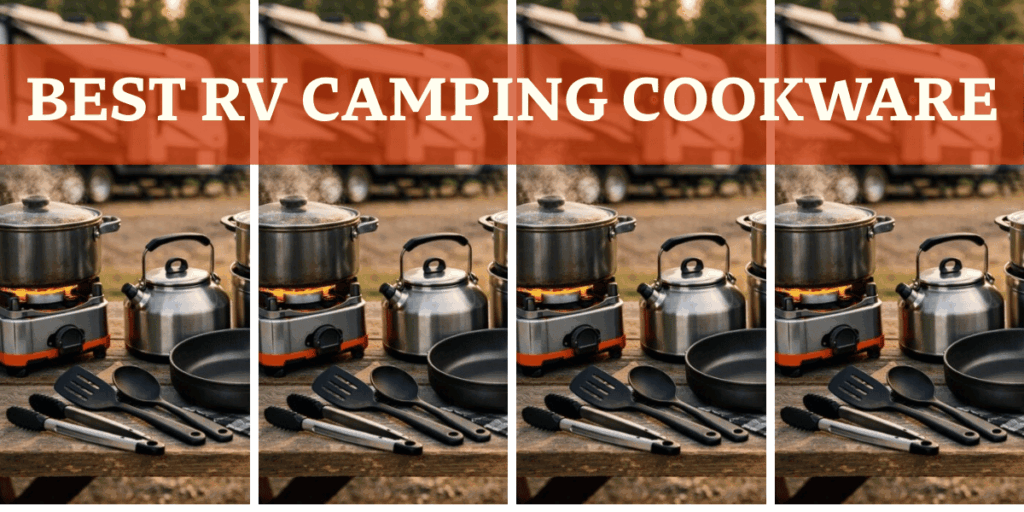
Cooking in your RV shouldn’t mean settling for subpar meals or wrestling with awkward pots and pans. Space is limited in your camper, and not every cookware set will work well on different heat sources or fit neatly in your cupboards. The best RV camping cookware features nesting design to save space, works on multiple cooking surfaces including propane stoves and campfires, and uses durable materials like stainless steel or nonstick coatings that make cleanup easier.
Finding the right cookware for your travels can transform your camping experience from frustrating to enjoyable. Nesting cookware sets take up minimal cupboard space by stacking inside each other like Russian nesting dolls, while detachable handles let you pack more efficiently. The right set will handle everything from morning eggs to evening stews without taking over your entire kitchen.
This guide walks you through what makes cookware suitable for RV life, the materials that hold up best on the road, and the features worth paying attention to when you shop. You’ll learn which sets offer the best value and how to maintain your cookware so it lasts for years of camping trips.
Key Takeaways
- Nesting cookware sets with detachable handles save valuable storage space in your RV kitchen
- Stainless steel and quality nonstick coatings offer the best durability for cooking on various heat sources
- Look for cookware compatible with multiple cooktops including propane, induction, and campfires for maximum versatility
This Post Is All About The Best RV Camping Cookware
What Makes Cookware Ideal For RV Camping?
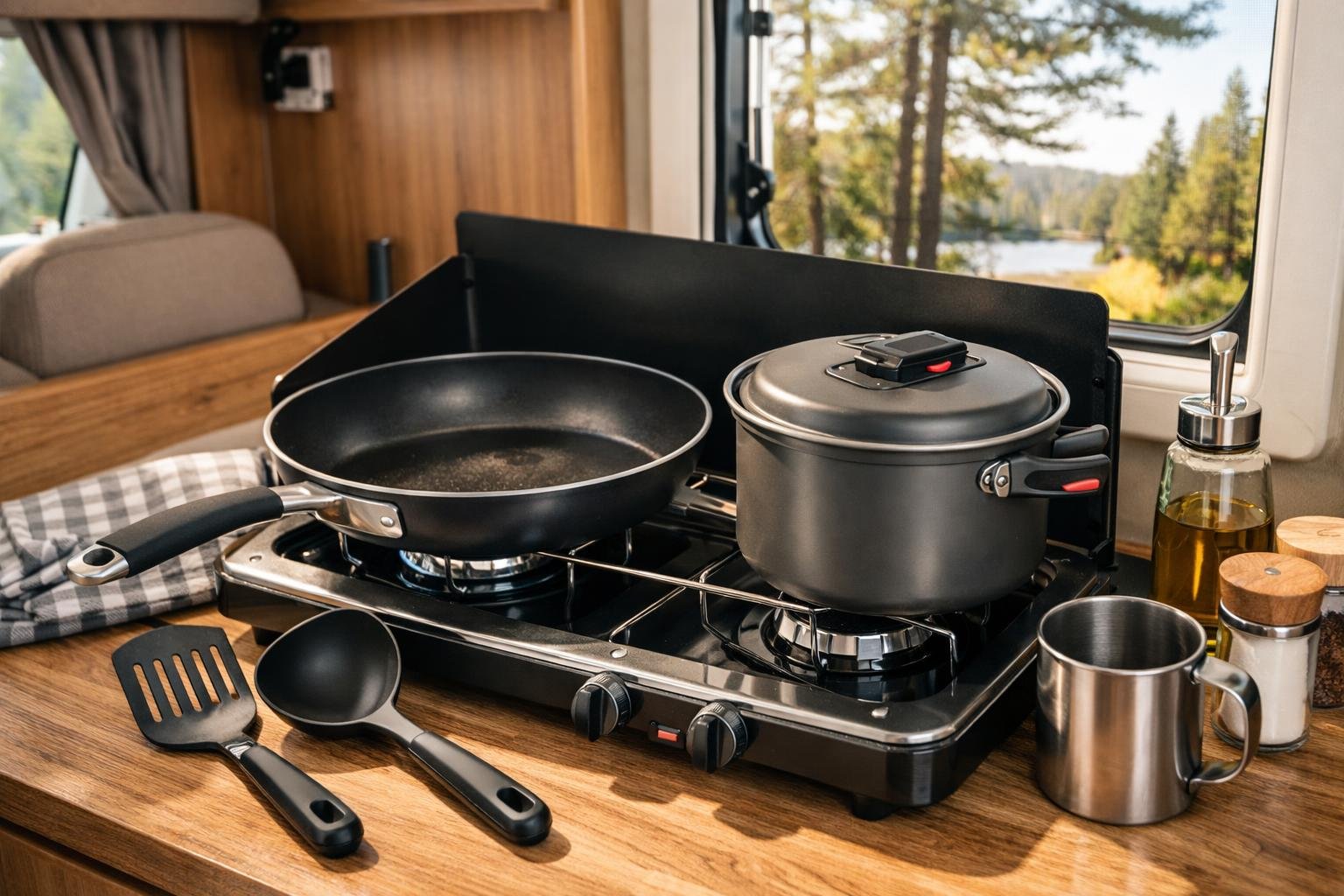
RV kitchens demand cookware that handles limited space, weight restrictions, and variable cooking conditions while still delivering reliable performance. The right camp cookware balances portability with durability and adapts to the unique challenges of mobile living.
Challenges of Cooking in an RV
Space is your biggest constraint in an RV kitchen. Cabinets and storage areas are much smaller than a traditional home, so bulky pots and pans quickly become a problem.
Weight matters more than you might think. Every kilogram in your RV affects fuel efficiency and can push you closer to weight limits. Heavy cast iron sets that work fine at home add unnecessary load during travel.
Your cooking surface changes depending on your RV setup. Some rigs have propane stoves, others use induction cooktops, and many campers cook over campfires or portable burners. Your cookware needs to work across these different heat sources.
Water access is often limited at campsites. You need camping cookware that’s easy to clean without requiring endless scrubbing or soaking. Nonstick surfaces help when you’re trying to conserve water.
Essential Qualities for RV Cookware
Look for cookware with detachable handles that lock securely during cooking. These handles save significant cabinet space and make storage more efficient. The mechanism should be sturdy enough to hold heavier pots without wobbling.
Stackability reduces the footprint of your cookware collection. Pieces that nest inside each other, like Russian nesting dolls, maximize your limited storage. This design lets you carry a complete set without dedicating multiple shelves.
Key features to prioritise:
- PFOA-free or ceramic nonstick coatings
- Oven-safe construction up to at least 180°C
- Compatibility with multiple heat sources
- Lightweight aluminium or titanium construction
- Secure lid storage systems
Durability is non-negotiable when your cookware travels on rough roads. Thin, cheap pans dent easily and lose their nonstick coating quickly under constant movement and use.
How RV Cookware Differs from Traditional Cookware
Traditional cookware assumes you have unlimited cabinet space and permanent countertops. Home kitchen sets often include specialty pieces you’ll rarely use while camping. RV cookware sets focus on versatile pieces that handle multiple cooking tasks.
The handle design separates RV cookware from home sets. Removable handles are rare in traditional cookware but essential for camper cooking sets. This feature alone can cut your storage needs in half.
Material choices differ too. While home cooks might prefer heavy stainless steel or cast iron, RV cookware typically uses lighter materials that still conduct heat well. The weight difference becomes obvious when you’re organizing cabinets or travelling on mountain roads.
Versatility matters more in an RV kitchen. Your best RV camping cookware transitions from stovetop to oven to outdoor fire without damage. Traditional sets often can’t handle this range of cooking methods.
Types Of Camping Cookware Sets For RVs
RV cookware falls into three main categories based on how the pieces fit together and store. Nesting sets collapse into compact units, mess kits bundle everything you need into one container, and modular pieces let you build your own collection.
Nesting Cookware Sets
These sets are designed so each pot and pan fits inside the next larger piece, similar to Russian nesting dolls. This design reduces the storage footprint dramatically compared to standard cookware.
The best feature of nesting cookware sets is the removable handle system. A single detachable handle locks onto any pot or pan in the set, then removes with a button push. This eliminates the tangle of fixed handles and lets pieces sit flush inside each other.
Most nesting sets include 8-10 pieces that collapse into a space smaller than a single large pot. You’ll typically find two or three pots in graduated sizes, a frying pan, and matching lids. Some sets add extras like a strainer lid or small cutting board that fits on top.
Materials matter for nesting sets:
- Stainless steel offers maximum durability
- Aluminium reduces weight significantly
- Ceramic coatings provide non-stick convenience
The trade-off with nesting systems is price. Quality sets with secure locking handles cost more than basic cookware, but they’re a smart investment if cabinet space is limited in your RV.
Mess Kits and All-in-One Systems
A mess kit combines cooking gear, eating utensils, plates, and bowls into one self-contained package. These compact systems originated from military and backpacking use but work perfectly for RV camping.
Camping cookware sets in the mess kit style typically include one or two pots, a pan, plus plates and cups that nest inside. Everything stores in a stuff sack or the largest pot itself. Some kits even include a folding pot gripper instead of fixed handles.
Mess kits shine for weekend trips or couples who don’t need extensive cooking capability. They’re lightweight and extremely compact, making them ideal for smaller RVs or van conversions. The downside is limited capacity—you’re usually cooking for one or two people maximum.
Look for kits with hard-anodised aluminium construction for better heat distribution. The non-stick coating makes cleanup easier when you’re conserving water at camp.
Modular and Individual Pieces
Building your own collection from individual camping pots and camping pans gives you complete control over what you carry. You select only the pieces you actually use instead of working with a pre-packaged set.
This approach works well if you have specific cooking needs. You might choose a large pot for pasta, a small saucepan for morning coffee, and one quality frying pan. Stackable designs with similar diameters help maximize cabinet space even without true nesting.
RV pots and pans with detachable handles are available as individual pieces too. Brands like CAROTE and BEZIA offer induction-compatible options that stack efficiently. The modular method costs less upfront since you buy pieces gradually.
The challenge is ensuring everything fits together logically in your limited storage. Measure your cabinet space before purchasing, and look for pieces with similar base diameters that can nest or stack without wasted gaps between them.
Key Features to Consider When Choosing RV Camping Cookware
Material choices determine how your cookware performs on the road, while design features like removable handles and nesting capabilities directly impact your available storage space. Weight matters for fuel economy, and smart accessories can eliminate the need for extra kitchen tools.
Material and Durability
The material you choose affects cooking performance, weight, and how long your cookware lasts. Aluminum cookware heats quickly and weighs less than other options, making it ideal for conserving propane and reducing vehicle weight. Hard-anodized aluminum offers better scratch resistance than standard aluminum.
Stainless steel provides exceptional durability and won’t react with acidic foods. It resists dents and scratches from road vibrations. However, stainless steel weighs more and requires an aluminum or copper core for proper heat distribution on RV stovetops.
Cast iron pans deliver unmatched heat retention and natural non-stick properties when properly seasoned. They work on any heat source including campfires. The main drawback is significant weight that affects fuel economy.
Titanium cookware offers the best strength-to-weight ratio available. It’s extremely durable and corrosion-resistant. The high cost and learning curve for temperature control make it less practical for most RV travellers.
A non-stick coating simplifies cleanup when water is limited. Titanium-reinforced coatings last longer than standard versions but still require careful handling.
Heat Distribution and Cooking Performance
Even heating prevents hot spots that burn food on inconsistent RV burners. Multi-layer construction with aluminum cores between stainless steel layers distributes heat more uniformly than single-layer pots.
RV stovetops often produce less consistent heat than home ranges. Cookware with thick bases maintains steady temperatures despite fluctuating burner output. Thin aluminum pots heat quickly but create temperature spikes that make cooking difficult.
Look for compatibility with your specific heat source. Induction cooktops require magnetic bases. Propane and electric burners work with most materials. Some RVers cook over campfires, which demands materials that tolerate high, direct heat without warping.
Heat indicators help you know when pans reach proper cooking temperature. This feature prevents common mistakes on unfamiliar RV stovetops.
Compact, Lightweight, and Space-Saving Design
Nesting cookware sets stack inside each other like Russian dolls. This compact design can reduce storage space by 50% compared to traditional pots and pans. Check that lids fit securely inside nested pieces without rattling during travel.
Weight affects fuel consumption and towing capacity. A complete lightweight cookware system weighing under 5 pounds makes more sense than heavy alternatives for frequent travellers. Every kilogram counts when calculating payload limits.
Measure your available cabinet space before purchasing. Some nesting sets appear compact but still require specific dimensions to fit properly. Standard home cookware rarely fits RV storage efficiently.
Consider vertical storage solutions. Pots with removable handles stack flatter in drawers. This arrangement prevents items from shifting during travel while maximizing limited cabinet space.
Handle, Lid, and Accessory Innovations
Removable handles transform cookware into compact storage units while enabling stovetop-to-oven cooking. A single handle that fits all pieces in your set reduces weight and clutter. The attachment mechanism must lock securely—you don’t want hot soup spilling because of a loose connection.
Folding handles collapse flat for storage but stay permanently attached. They provide more confidence than removable options when moving heavy, hot pots. Silicone-covered handles prevent burns and grip comfortably.
Vented lids release steam pressure while locking during travel to prevent rattling. Built-in strainer holes eliminate the need for separate colanders when draining pasta or vegetables. Strainer lids save precious storage space and reduce items you need to pack.
A pot gripper allows safe handling of cookware with detached handles. This tool proves essential for removing hot pots from ovens or fires.
Glass lids let you monitor cooking without releasing heat and wasting propane. However, they add weight and can break during rough travel. Metal lids with steam vents offer better durability.
Look for sets that include insulated mugs and plates. Integrated dinnerware eliminates separate purchases and ensures everything nests together efficiently.
Top-Rated RV Camping Cookware Sets for 2026
When selecting cookware for your RV, you need sets that balance durability with smart space-saving design. The best camping cookware sets combine materials that heat evenly, nest efficiently, and withstand varied cooking methods from propane stoves to open flames.
Best Overall RV Cookware Sets
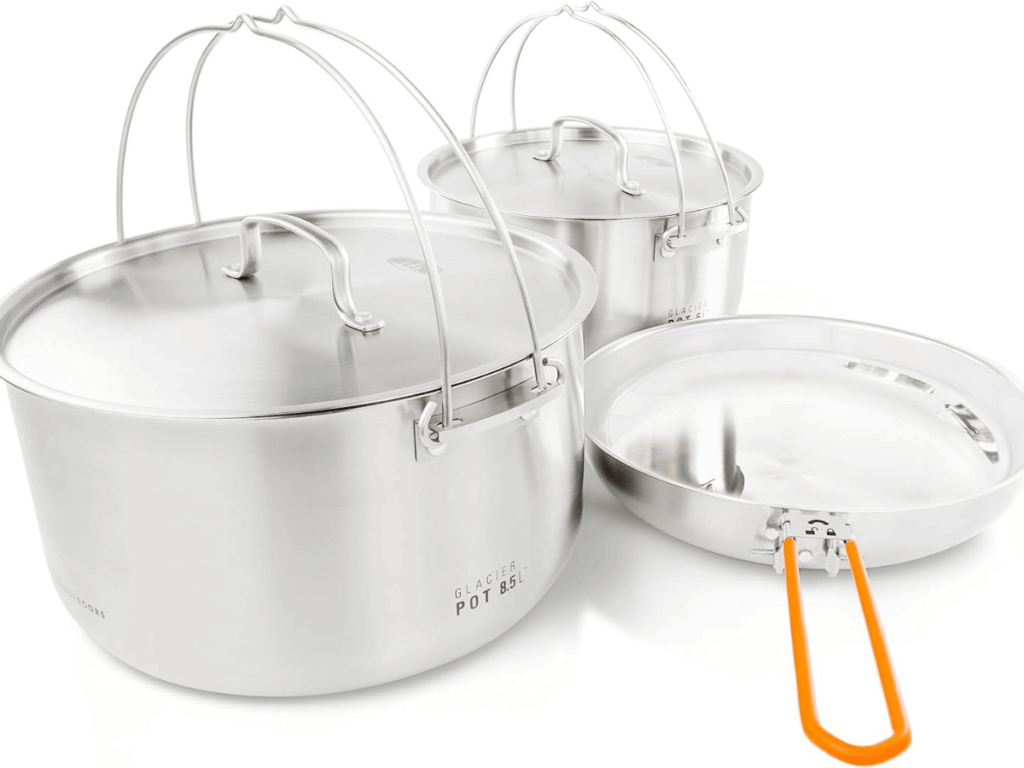
The GSI Outdoors Glacier Stainless Troop Cookset stands out as a top choice for RV owners who need versatile, durable cookware. This set includes multiple pots and pans made from 18/8 stainless steel with an aluminum core for even heat distribution. You get nested pieces that save valuable cupboard space whilst providing enough cooking capacity for families.
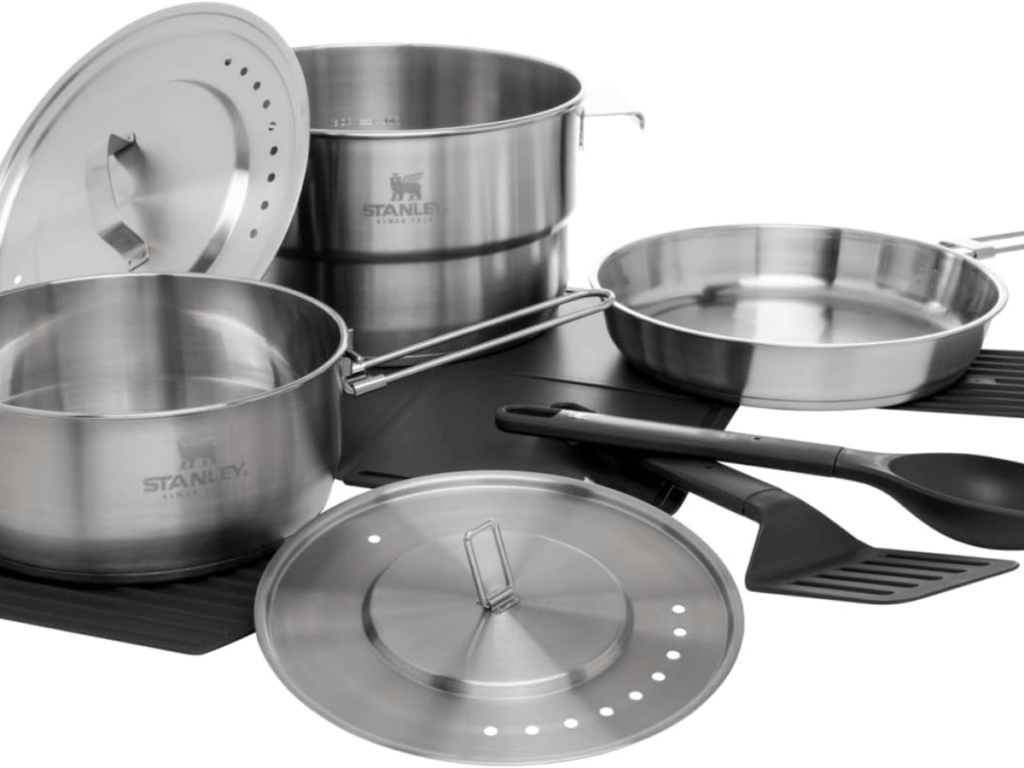
The Stanley Adventure Base Camp Cook Set offers another excellent all-around option with its robust stainless steel construction. It includes a 3.2-litre pot, two 600-millilitre bowls, and four plates that all nest together. The handles fold for compact storage, and the set’s durability means it handles both stovetop and campfire cooking without issue.
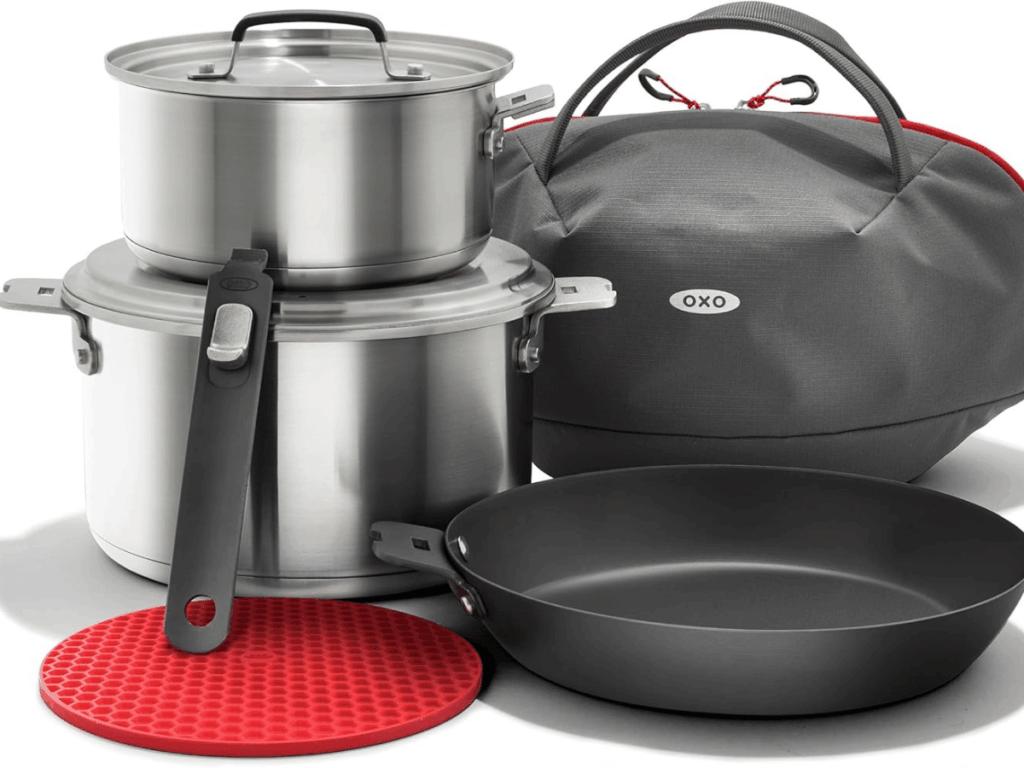
For RVers who want professional-grade materials, the OXO Outdoor 8 Piece Camping Cookware Set features a pre-seasoned carbon steel frying pan that develops a natural non-stick surface over time.
Best Lightweight Options
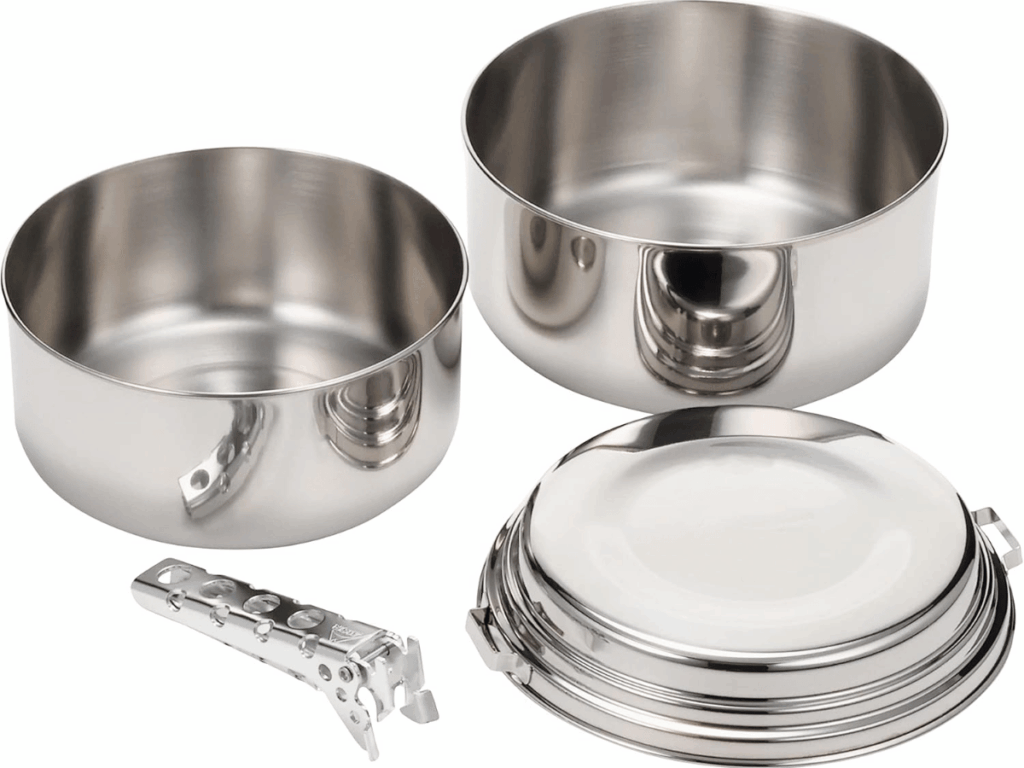
The MSR Alpine 2 Pot Set delivers exceptional weight savings without sacrificing functionality. Made from hard-anodized aluminum, these pots weigh significantly less than stainless steel alternatives whilst still providing excellent heat conduction. The non-stick coating makes cleanup quick, which matters when you’re working with limited water supplies.
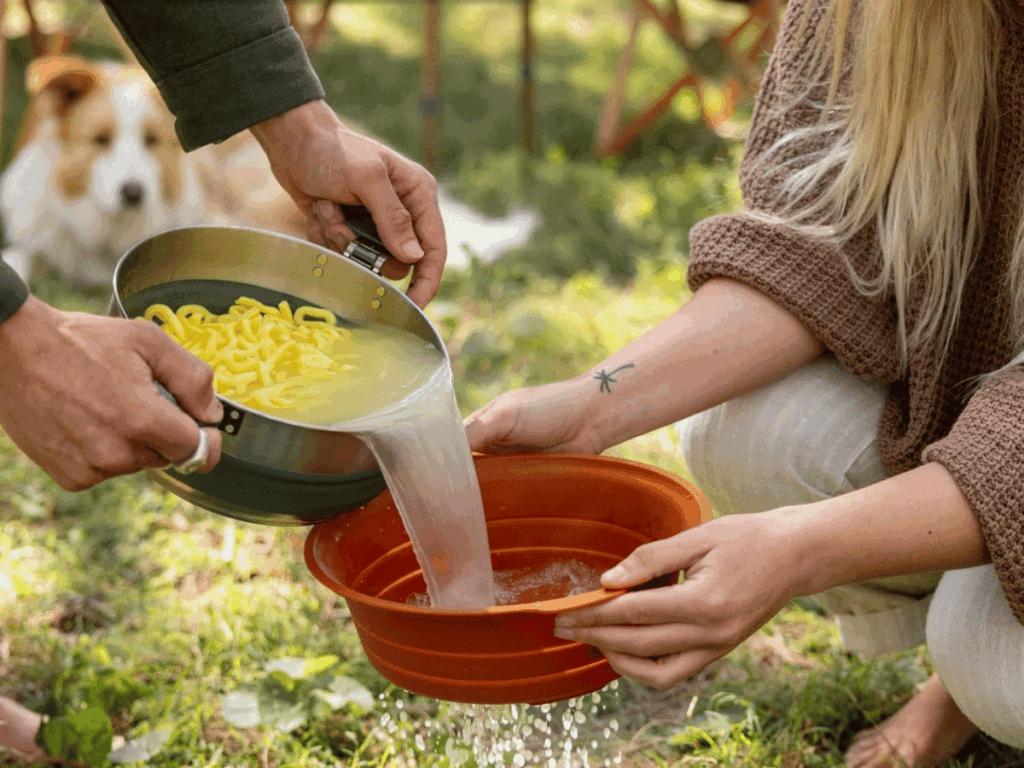
The Sea to Summit X-Pot takes lightweight design further with collapsible silicone sides and a rigid aluminum base. You can compress it to just 4 centimeters thick, making it ideal for RVs with minimal storage space. The food-grade silicone withstands high temperatures, and the pot holds 2.8L when expanded.
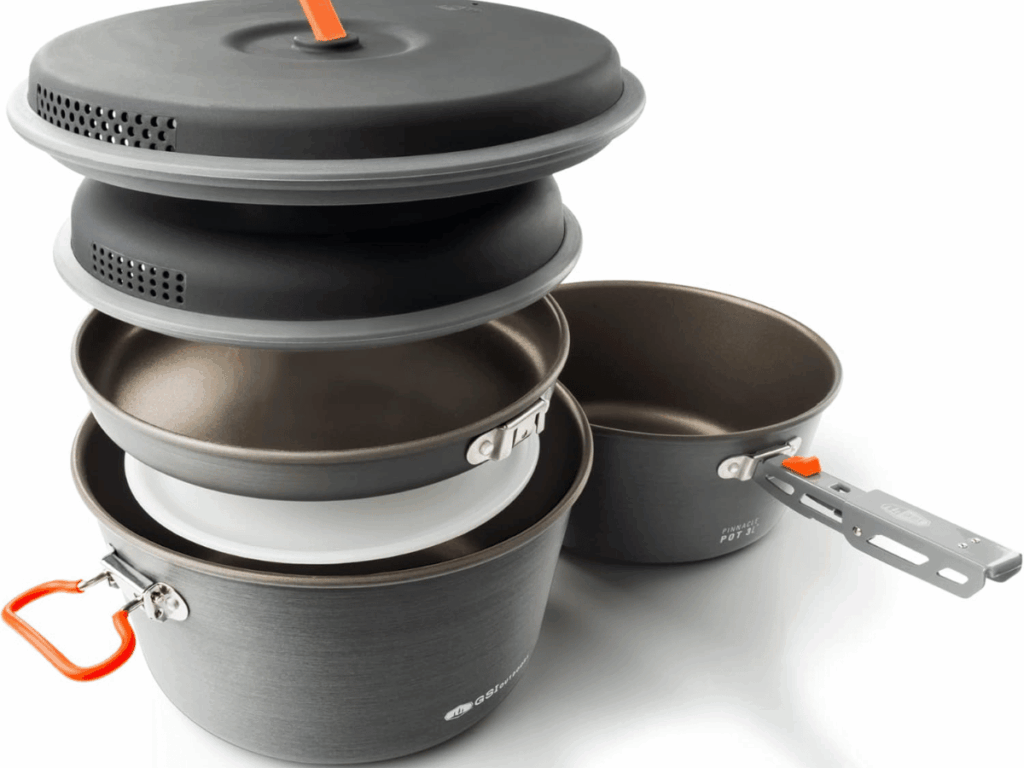
GSI Pinnacle Camper cookware uses thin-gauge aluminum with a non-stick coating to keep weight down. The set includes pots, a frying pan, and plates that nest completely. Each piece features a hard-anodized exterior that resists scratches and wear.
Best Compact and Nesting Sets
Nesting cookware sets solve the space challenge that RV kitchens present. The Magma Products nesting cookware features 18/10 stainless steel pieces with detachable handles that snap onto tabs riveted on the sides. Five separate pots and pans nest into the space of one, and two universal lids fit multiple pieces.
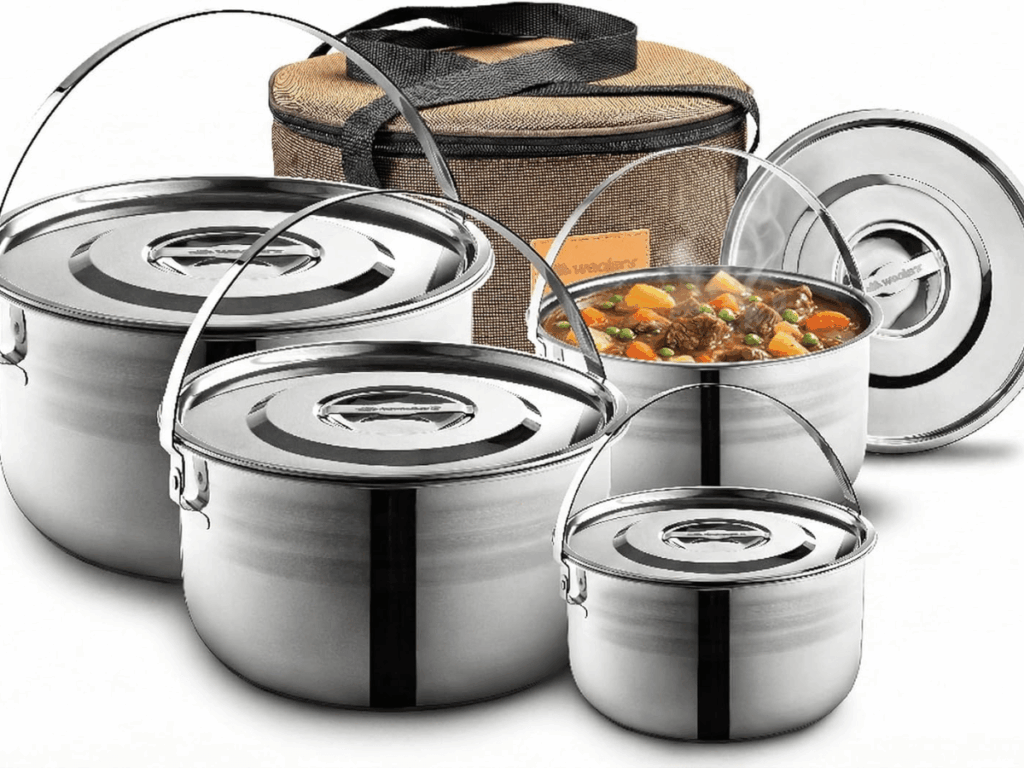
The Wealers Stainless Steel Cookware Set includes a frying pan with a screw-on handle and saucepans with folding handles. Everything nests together and secures with an included bungee cord. You also get a carrying case, making this set portable for outdoor cooking away from your RV. The 304 stainless steel construction works on induction cooktops.
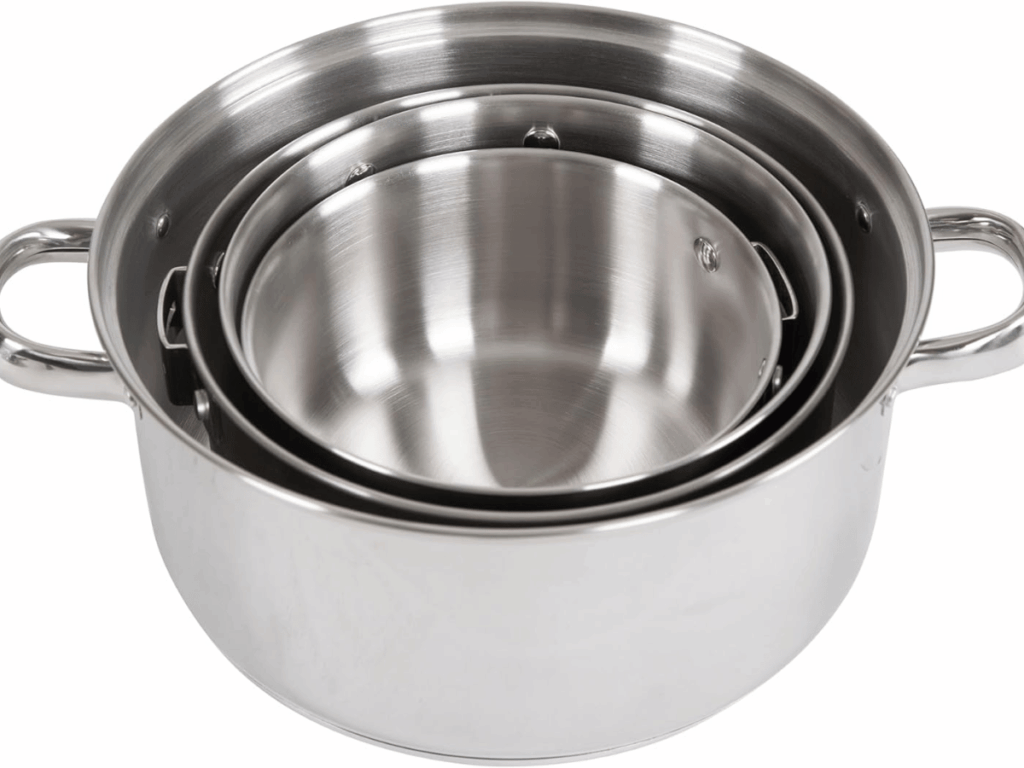
The STANSPORT Stainless Steel Clad Cookware Set provides seven pieces with a detachable handle system. The 2-millimetre-thick stainless steel with triple-ply aluminum-clad spiral bottom ensures even heating, and the universal lid fits most pots in the set.
Best Cast Iron and Heavy-Duty Choices
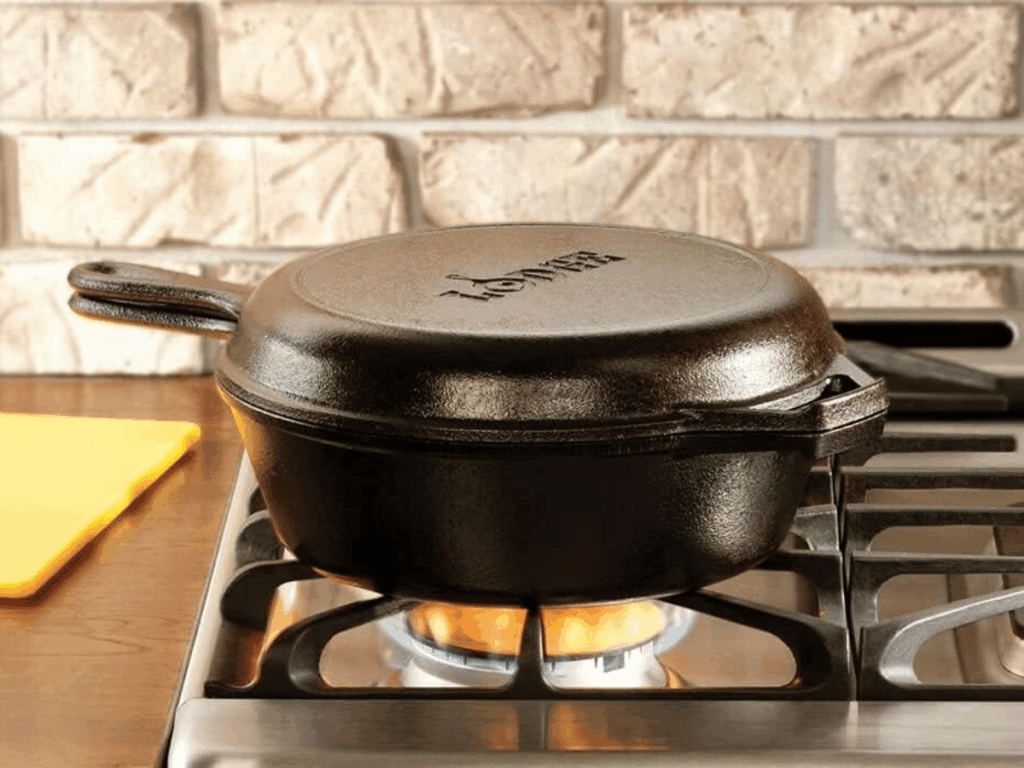
The Lodge 3.2 Quart Cast Iron Combo Cooker gives you two pieces that work as a deep skillet and a shallow frying pan. Cast iron provides unmatched heat retention for searing meats and baking, though it adds weight to your RV setup. Pre-seasoning means you can start cooking immediately, and proper care keeps the surface naturally non-stick.
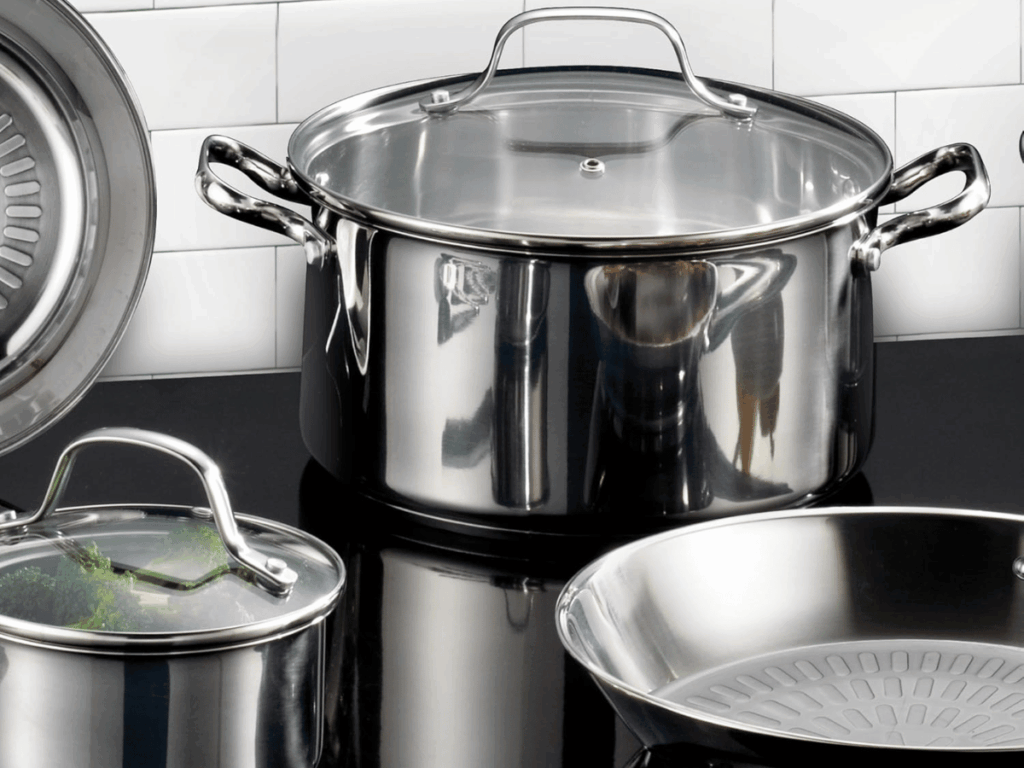
The T-fal Pro E760SC features fully stainless steel construction with thick bases that retain heat efficiently. These pots work on induction cooktops and feature embossed Techno-release patterns that make scraping off burnt food easier. Whilst bulkier than nesting sets, the solid build quality withstands years of regular use.
Heavy-duty stainless steel sets with riveted handles and thick-gauge construction resist warping on high heat. You’ll find these options last longer than lightweight alternatives, making them worthwhile investments if you have adequate storage space in your RV.
Best Materials for RV Camping Cookware
Each cookware material offers distinct advantages for RV cooking, from lightweight aluminum that heats quickly to durable stainless steel that lasts for years. Your choice depends on your cooking style, storage space, and how much weight your RV can handle.
Stainless Steel
Stainless steel stands out as one of the most durable options for RV dishes and cookware. This material resists rust, dents, and scratches better than most alternatives. You can scrub it vigorously without worrying about damaging the surface.
The main challenge with stainless steel is its weight. A full set can add significant pounds to your RV, which affects fuel economy on long trips. Stainless steel also heats unevenly unless it includes an aluminium or copper core between the layers.
Look for 18/8 or 18/10 stainless steel, which contains chromium and nickel for superior corrosion resistance. These numbers indicate the percentage of chromium and nickel in the steel. The material works on all heat sources, including induction cooktops found in newer RVs.
Aluminum
Aluminum cookware heats up faster than any other material, which saves propane when you’re boondocking. This lightweight metal weighs roughly half as much as stainless steel sets of the same size. You’ll find it easier to handle and store in tight RV cabinets.
Hard-anodized aluminum offers enhanced durability compared to standard aluminum. The anodizing process creates a harder surface that resists scratches and wear. However, bare aluminum can react with acidic foods like tomatoes, potentially altering flavours.
Most aluminum RV cookware features a non-stick coating to prevent sticking and make cleanup easier. Remember that aluminum cookware isn’t compatible with induction cooktops unless it has a magnetic base plate added to the bottom.
Titanium
Titanium cookware represents the premium lightweight option for serious RV travellers. It weighs less than aluminium while offering strength comparable to stainless steel. A titanium pot can take years of heavy use without denting or warping.
The material heats quickly and efficiently, conserving propane during off-grid camping. Titanium naturally resists corrosion and won’t impart metallic flavours to your food. You can use metal utensils without scratching the surface.
The main drawback is cost. Titanium cookware typically costs two to three times more than stainless steel equivalents. The material also conducts heat so efficiently that it can create hot spots if you’re not careful with temperature control.
Cast Iron
A cast iron pan delivers unmatched heat retention and can go directly from stovetop to campfire to oven. Cast iron withstands hot campfire flames and accidental drops that would damage other materials. Pre-seasoned cast iron provides natural non-stick properties that improve with use.
The significant weight makes cast iron impractical for large cookware sets in RVs. A single 12-inch skillet weighs around five pounds. You’ll need to secure it properly during travel to prevent it from shifting and causing damage.
Cast iron requires specific maintenance to prevent rust. You must dry it thoroughly after washing and apply a light coat of oil. The material also takes longer to heat up, using more propane than lighter alternatives.
Accessories and Handy Add-Ons for RV Cooking
Smart accessories can transform your RV cookware from functional to exceptional. Removable handles save cabinet space, pot grippers protect your hands, and specialized lids add versatility to your cooking setup.
Folding and Removable Handles
Removable handles are essential for maximizing limited RV storage space. These detachable components let you stack pots and pans efficiently, reducing the space needed by up to 70%.
The handles attach securely when you’re cooking and remove completely for storage. You’ll find them on nesting cookware sets with detachable handles that include multiple pieces sharing one handle.
Most removable handles use a simple clamp mechanism. You press a button or lever to attach and release the handle from the cookware rim.
Folding handles offer a similar benefit without complete removal. They fold flat against the side of your pot or pan, making storage more compact whilst remaining permanently attached to the cookware.
Pot Grippers and Sporks
A pot gripper is a specialized tool that clamps onto hot cookware edges when handles aren’t available. These grippers provide a secure hold on rimmed pots, bowls, and pans.
Pot grippers work especially well with nesting cookware sets that share removable handles. You can lift hot items safely without waiting for the single handle to become available.
Folding sporks combine a spoon and fork into one compact utensil. These multi-purpose tools reduce the number of utensils you need to pack and store in your RV kitchen drawers.
Many camping sporks fold in half or feature collapsible designs. This makes them ideal for tight storage spaces whilst remaining fully functional when extended.
Lids, Strainers, and Insulation Features
Strainer lids feature built-in holes that let you drain pasta, vegetables, or other foods without needing a separate colander. You simply hold the lid in place and tip the pot to pour out excess water.
Vented lids include small openings that release steam during cooking. This prevents boil-overs and lets you simmer foods without lifting the lid repeatedly.
Universal lids fit multiple pot and pan sizes, reducing the number of lids you need to store. Look for tempered glass lids that let you monitor cooking progress without removing them.
Insulated mugs keep your beverages hot or cold for hours in your RV. Double-walled stainless steel construction provides the best temperature retention whilst remaining durable for travel.
Tips for Using and Maintaining RV Camping Cookware
Proper care and smart usage habits will extend the life of your camp cookware while keeping your RV kitchen organised and safe. Understanding how to clean, store, and use your cookware with different heat sources prevents damage and maximises your investment.
Cleaning and Storing Cookware in Small Spaces
Clean your RV cookware immediately after each meal to prevent food from hardening and taking up valuable counter space. Use a small basin or collapsible sink to wash dishes efficiently with minimal water.
For non-stick surfaces, avoid abrasive scrubbers that damage the coating. A soft sponge with warm soapy water works best. Cast iron requires different care—wipe it clean while still warm, use minimal soap, and apply a thin layer of oil before storing.
Store pots and pans using nesting cookware designs that fit inside each other like Russian nesting dolls. This method saves significant cabinet space. Place a paper towel or cloth between nested pieces to prevent scratches.
Install hooks on cabinet doors or walls to hang frequently used items. Stackable cookware keeps lids and pans organised without toppling over during travel. Secure everything with non-slip shelf liners or tension rods to prevent shifting while driving.
Maximising Safety and Longevity
Always check that handles are tightened and secure before cooking. Loose handles can cause accidents and spills in your compact RV kitchen.
Use pot holders or heat-resistant gloves every time you handle hot cookware. Metal handles heat up quickly on camp stoves and can cause burns.
Avoid thermal shock by not placing hot pans directly into cold water. Let cookware cool gradually to prevent warping or cracking. This is especially important for camping cookware materials like stainless steel and titanium.
Store cookware in secured locations to prevent items from becoming projectiles during sudden stops. Never stack heavy cast iron pieces above eye level where they could fall and cause injury.
Camp Stove and Heat Source Compatibility
Match your cookware to your heat source for best cooking performance. Propane camp stoves work with most materials, but induction cooktops require magnetic-based cookware like stainless steel or cast iron.
Use flat-bottomed pans on portable stoves to ensure even heat distribution. Warped or rounded bottoms create hot spots and waste fuel.
Check the size of your burners before buying large pots. Oversized cookware hangs over the edges and heats unevenly. For open-fire cooking, only use cast iron or specified fire-safe materials.
Adjust flame levels carefully with camp stoves. High heat isn’t always necessary and can damage non-stick coatings or warp thinner pans.
Frequently Asked Questions
RV campers need cookware that balances durability with compact storage, while materials like stainless steel and hard-anodized aluminum offer different advantages for weight, heating efficiency, and longevity.
What are the essential pieces of cookware for RV camping?
You need a medium-sized pot with lid for boiling water and cooking pasta or rice. A frying pan handles eggs, pancakes, and sautéing vegetables for most meals.
Add a smaller saucepan for heating soups or making sauces. These three pieces cover about 80% of typical RV cooking needs.
A collapsible colander saves space while letting you drain pasta and wash vegetables. You’ll also want basic utensils including a spatula, serving spoon, and tongs that resist heat.
How do I choose durable materials for my RV cookware that will last?
Stainless steel with an aluminum core provides excellent durability and resists warping from road vibrations. This material combination distributes heat evenly and works on all cooktop types including induction.
Hard-anodized aluminum weighs less than stainless steel while offering good scratch resistance. The surface stands up to regular use better than standard aluminum.
Avoid thin aluminum cookware that dents easily and develops hot spots. Look for welded handles rather than riveted ones since they won’t loosen over time from constant movement during travel.
Titanium-reinforced nonstick coatings last longer than standard nonstick surfaces. They resist scratching from metal utensils better while maintaining their food-release properties through hundreds of cooking sessions.
What are some space-saving solutions for storing cookware in an RV?
Nesting cookware sets stack inside one another to reduce cabinet space by up to 50%. The largest pot holds all smaller pieces, creating one compact package.
Removable handle systems let you detach handles from pots and pans for flatter storage. These handles typically lock onto multiple pieces in your set, eliminating the need for separate handles on each item.
Hang pots and pans from ceiling-mounted or wall-mounted racks to free up cabinet space. This approach also prevents clanging during travel when you secure items properly.
Store lids vertically in a small rack or tension rod system inside cabinet doors. You can also nest lids together separately from the pots to maximize space efficiency.
Can you recommend cookware that’s versatile for both indoor and outdoor RV cooking?
Cast iron skillets work on RV stovetops, campfires, and outdoor grills equally well. They handle high heat without warping and develop better nonstick properties over time with proper seasoning.
Cookware compatible with multiple heat sources gives you flexibility when camping in different locations. Look for sets that work on gas, electric, induction, and open flames.
Stainless steel pots with sturdy handles transition easily from indoor cooking to hanging over a campfire. The material won’t release harmful chemicals when exposed to direct flames.
Dutch ovens serve as roasting pans, bread bakers, and slow cookers whether you’re cooking inside or outside. Their tight-fitting lids trap moisture for tender results regardless of heat source.
How do I maintain and care for my RV camping cookware to ensure its longevity?
Clean cookware promptly after each use to prevent food from hardening and becoming difficult to remove. Dried-on food requires more scrubbing, which wears down nonstick coatings faster.
Avoid metal utensils on nonstick surfaces since they scratch the coating and reduce its effectiveness. Use silicone, wood, or plastic utensils instead to extend the life of nonstick pans.
Dry cookware completely before storing to prevent water spots on stainless steel and rust on cast iron. Store pieces with paper towels or cloth between them to protect surfaces from scratches during travel.
Season cast iron cookware regularly by coating it with thin layers of oil and heating it. This maintains the protective coating that prevents rust and improves nonstick properties.
Hand wash cookware when possible even if it’s labelled dishwasher safe. The gentler cleaning extends the life of nonstick coatings and keeps handles secure longer.
Are there any cookware sets particularly well-suited for RV camping families?
Larger capacity sets with multiple pot sizes accommodate family meal preparation better than compact two-person sets. Look for sets that include at least one pot with a 3-litre capacity or more.
Complete cooking systems with 15 to 19 pieces provide enough variety for family cooking without requiring separate purchases. These sets often include plates and utensils that work for multiple people.
Choose sets with two frying pans in different sizes so you can cook multiple items simultaneously. This speeds up breakfast preparation when feeding several hungry campers.
Nonstick coatings simplify cleanup after family meals, which matters more when you’re managing limited water supplies. Easy-cleaning surfaces reduce the time you spend on dishes so you can enjoy more family activities.
Durable materials like stainless steel or hard-anodized aluminum withstand the heavier use that comes with cooking for families. These materials resist denting and warping better than thinner alternatives when used frequently.